Saturday, April 1, 2017

It's time to end the autism epidemic (part 4)

In part 1 of this blog series, I approached the problem of autism spectrum disorders (ASD) like a computer programmer looking for a programming glitch. The best output data available point to a problem in the homocysteine-methionine cycle being involved in approximately 95% of autism cases. (Because autism diagnoses criteria are still subject to some debate, I wouldn't expect us to ever find a 100% correlation between any one physical process and autism.) Recent findings, outlined in parts 2 and 3, indicate that autism development is more specifically linked to the methionine synthase (MS) homocysteine-to-methionine pathway. Having formulated a hypothesis that methinone synthase dysfunction is involved in autism, I next developed a testable prediction based on the existence of an alternative homocysteine-to-methionine pathway catalyzed by the enzyme betaine-homocysteine methyltransferase (BHMT). My prediction is that nutritional support of BHMT activity will partially make up for MS dysfunctions and in that way protect against developing an autism spectrum disorder. Let's examine whether the data support that prediction.

First, BHMT is a zinc-containing enzyme, so having enough zinc in one's body should correlate with a lower ASD risk. That does indeed appear to be the case. (https://www.ncbi.nlm.nih.gov/pmc/articles/PMC5100031/, https://www.ncbi.nlm.nih.gov/pmc/articles/PMC3563033/, https://www.ncbi.nlm.nih.gov/pubmed/26218250)

Second, BHMT requires glycine betaine (trimethylglycine or TMG) as a substrate. What is TMG?
Betaine is found in microorganisms, plants, and animals and is a significant component of many foods, including wheat, shellfish, spinach, and sugar beets. Betaine is a zwitterionic quaternary ammonium compound that is also known as trimethylglycine, glycine betaine, lycine, and oxyneurine. It is a methyl derivative of the amino acid glycine with a formula of (CH3)3N+CH2COO and a molecular weight of 117.2, and it has been characterized as a methylamine because of its 3 chemically reactive methyl groups. Betaine was first discovered in the juice of sugar beets (Beta vulgaris) in the 19th century and was subsequently found in several other organisms. The physiologic function of betaine is either as an organic osmolyte to protect cells under stress or as a catabolic source of methyl groups via transmethylation for use in many biochemical pathways.

http://ajcn.nutrition.org/content/80/3/539.full; Craig SAS. "Betaine in human nutrition." Am J Clin Nutr 2004;80(3):539-549.

Here's a listing of the some of the best sources of TMG:

Food itemBetaine content
mg/100 g
Wheat bran1339
Wheat germ1241
Spinach600-645
Beets114-297
Pretzels237
Shrimp219
Wheat bread201
Crackers49-199
http://ajcn.nutrition.org/content/80/3/539/T1.expansion.html

The very best sources of TMG are mussels, clams, oysters, and scallops, but due to cost and convenience factors they tend not to be commonly-eaten components of cuisines in areas with reported statistics for autism prevalence. Moreover, it is not clear just how much TMG is actually available during digestion from unpulverized mussels, oysters, clams, and scallops, all of which when cooked whole are too often rubbery and difficult to chew. So I will have to pass shellfish by and look at plant sources of TMG.

Inside plant cells, TMG functions as an osmoprotectant (https://academic.oup.com/jxb/article/51/342/81/485733/Genetic-engineering-of-glycinebetaine-synthesis-in), and in onions TMG has been demonstrated to protect cell membranes against NaCl-induced membrane permeability. (http://cat.inist.fr/?aModele=afficheN&cpsidt=2422100) Hence, it is to be expected that methods of vegetables and grain preparation which rupture plant cell membranes would be more effective at freeing TMG for human dietary absorption than would other food preparation methods that tend to leave TMG-protected plant cell membranes intact. It has been found that boiling is highly effective at removing TMG from foods and that the TMG is largely recoverable from the liquid that the food was boiled in (http://www.sciencedirect.com/science/article/pii/S0308814603000633). Free TMG in an aqueous solution and liberated from its original plant cells should be the most easily-absorbed of all TMG dietary sources. The highest levels of TMG in plant sources are found in wheat bran and germ, spinach, and Beta vulgaris (beetroot and chard). (Update 4/26/2017: I just learned today that amaranth is also a betaine-accumulating plant and that amaranth greens are widely eaten in many parts of the world. Here's a post about the topic.)

Which regional cuisines have high amounts of boiled wheat bran and wheat germ? Wheat gruel has fallen out of popularity in the wheat-eating parts of the world in the past couple of centuries. We do boil pasta, but the pasta is often manufactured so as to be mostly devoid of wheat germ and bran. Also, during the boiling of pasta, most of its TMG content leaches into the water and is subsequently dumped down the drain instead of being ingested. (Update 4/8/2017: I overlooked the use of cracked wheat--or bulgur--in many countries and cuisines, so here's a post about it. And here's a post discussing non-wheat grains that are high in TMG.)

What about spinach? I know of only one major regional cuisine that frequently utilizes boiled spinach together with the liquid in which it was boiled. That region is that of northern India and Pakistan, where they often eat palak (spinach) puree dishes; in the USA, this puree can be found in the Punjabi dish palak paneer. Due to poverty and health care issues, autism statistics in all of India are not clear. But a recent study out of the Punjab region (https://www.ncbi.nlm.nih.gov/pmc/articles/PMC4943381/) found an ASD prevalence of merely 0.9/1000 (1 in 1,111). In comparison, the ASD rate in the USA is 14.6/1000 (1 in 68) (https://www.cdc.gov/mmwr/volumes/65/ss/ss6503a1.htm).

And what about beets? Beets are actually what brought me to see the importance of TMG in preventing autism. I lived in Poland, and I know how important a part of their cuisine beetroot is, especially cooked into a strained borscht-like soup called "barszcz cerwony." Did you catch that? Strained. That means barszcz czerwony is simply full of TMG and doesn't include any plant fiber to decrease the TMG percentage of the soup. If my hypothesis is correct, then Poland should have a very low autism prevalence. And Poland apparently does, per a 2015 study of health records:
The National Health Fund reported that 13 261 individuals up to 18 years of age received health services for autism and related disorders in Poland in 2012. This is a prevalence rate of 3.4 cases per 10 000 individuals. Incidence rates vary in different Polish regions, with the highest rates recorded in the following voivodships: warmińsko-mazurskie (6.5 cases per 10 000 individuals), śląskie (5.0), and pomorskie (4.6). The provinces with lowest rates were podlaskie (2.1), małopolskie (1.9), zachodniopomorskie (1.9), and łódzkie (1.8). These rates are far lower than those in European countries (20 per 10 000) and United States (200 per 10 000) epidemiological surveys.

http://www.sciencedirect.com/science/article/pii/S1230801315000119

Despite having guaranteed health care for all Polish children, Poland appears to be diagnosing ASD in only .34/1000, or 1 in 2941, children. Can the USA really have approximately 40 times more children with ASD than Poland? Perhaps the Polish people, due to language and training differences, just don't know about autism? That is highly unlikely. There have been Polish universities offering English-language medical school programs for over twenty years. And Poles themselves, including Polish doctors, have been working in the United Kingdom (UK)--where autism is certainly well-known--in large numbers since Poland joined the European Union (EU), which enabled its citizens easily to work in other EU countries.

If the beetroot soup and other beet consumption is protecting the Polish children from developing ASD, then other countries and cultures that often eat borscht and the juice of boiled beets should have lower rates of ASD. And they do.


Other countries that eat borscht as part of their traditional cuisines include Russia, Belarus, Romania, and Lithuania, for all of which we lack clear statistics about ASD prevalence. Based on my interactions with people from eastern Europe, autism seems to be be much less of a problem for their societies than it is for western Europe and the USA currently (https://www.autismspeaks.org/science/science-news/europe-gets-active-autism).

The evidence above bears out my prediction that high levels of free TMG in the diet will protect against development of autism spectrum disorders. One counterclaim that could be made, though, is that genetics might actually be behind the lower rates of ASD in the above-cited regions and cultures, but I do not consider that a strong argument because much of the US population is of partial or full Germanic ancestry, either from Germany or via English heritage. Moreover, I have two young male relatives of half-Slavic background, and only the one born and raised in the USA exhibits ASD symptoms.

In short, I consider the evidence convincing that 1) a dysfunction involving methionine synthase is causally connected to autism spectrum disorders, and 2) high consumption of easily-absorbed glycine betaine protects against developing autism spectrum disorders.

**This is one of a series of posts. Here are the links to each entry in the series.**

Introduction
Part 1
Part 2
Part 3
Part 4
Conclusion

Friday, March 31, 2017

It's time to end the autism epidemic (part 3)

Besides 5-MTHF, we need a sufficient supply of methylcobalamin (MeCbl), a form of cobalamin (vitamin B12), in order to support methionine synthase (MS) function. There are four kinds of vitamin B12 available as supplements: methylcobalamin, adenosylcobalamin, hydroxocobalamin, and cyanocobalamin (CnCbl). Only methylcobalamin and adenosylcobalamin occur naturally in our bodies, and we normally get them from animal products. Hydroxocobalamin is produced by bacteria and then is made stable synthetically by using cyanide to change it from hydroxocobalamin to cyanocobalamin. Cyanocobalamin is the form of B12 typically put into multivitamins and fortified foods.

What happens when we ingest methylcobalamin? Unfortunately, it doesn't seem to go straight to where it might be needed in the body. A complex processing of B12, which is still the subject of investigation, happens in the cells first. (https://www.ncbi.nlm.nih.gov/pmc/articles/PMC4692085/, https://www.ncbi.nlm.nih.gov/pubmed/27771510) Methylcobalamin, adenosylcobalamin, and cyanocobalamin all undergo separation of the non-cobalamin part from the cobalamin part by the protein MMACHC. MMACHC catalyzes the decyanation of cyanocobalamin and the dealkylation of methylcobalamin and adenosylcobalamin, after which the cobalamin is chaperoned (cobalamin is very volatile on its own) and changed to adenosylcobalamin and methylcobalamin. The transformation of cobalamin to methylcobalamin, based on recent findings, appears to be part of an interplay of several proteins, including both MMACHC and methionine synthase (MS). (https://www.ncbi.nlm.nih.gov/pubmed/27771510) In other words, a problem with MS could not only affect MS in its homocysteine-salvaging function but could also make MeCbl less available to due to MS interacting with MMACHC, which decyanizes cyanocobalamin.

If you've ever read about chaos theory, you probably saw a mention of feedback loops. Feedback loops are an important principle to understand when dealing with systems of complex interactions such as those involving MS and B12 transport, conversion, and use.
The term feedback refers to a situation in which two (or more) dynamical systems are connected together such that each system influences the other and their dynamics are thus strongly coupled. Simple causal reasoning about a feedback system is difficult because the first system influences the second and the second system influences the first, leading to a circular argument. This makes reasoning based on cause and effect tricky, and it is necessary to analyze the system as a whole. A consequence of this is that the behavior of feedback systems is often counterintuitive.

http://authors.library.caltech.edu/25062/1/Feedback08.pdf (Feedback Systems: An Introduction for Scientists and Engineers. Karl Johan Åström; Richard M. Murray (2010). "§1.1: What is feedback?" Princeton University Press, p. 1).

I'm not going to try to untangle exactly what is happening between cyanocobalamin, MMACHC, and MS in the human brain, for we lack the necessary knowledge to do so at present. But we have evidence from a paper published last year that the fetal brain, for whatever reason, doesn't break down cyanocobalamin as well as expected.
We found CNCbl to be 15-fold higher in fetal samples, as compared to 0–20 yr old subjects, suggesting unique Cbl metabolism during fetal development. However, the underlying cause of this higher CNCbl level remains unclear, as does the biological origin CNCbl. Maternal folate and vitamin B12 supplementation is a common recommendation during pregnancy, which could be a source of the elevated CNCbl we observed, although Cbl levels in placenta were comparatively low. Conversion of CNCbl to active cofactors MeCbl and AdoCbl requires NADPH- or GSH-dependent decyanation by MMACHC and it is possible that the developing fetal brain has diminished decyanation capacity. The markedly higher level of inactive CNCbl could potentially have functional consequences by competing with MeCbl and AdoCbl, restricting their cofactor activity.

http://journals.plos.org/plosone/article?id=10.1371/journal.pone.0146797 (references omitted).

An excess of CnCbl in the developing fetal brain could be restricting MeCbl activity? Which would negatively affect MS activity? That's exactly what we don't want to have happen if MS dysfunction is behind autism spectrum disorders.

Too little B12 in the brain has been linked to autism. (http://journals.plos.org/plosone/article?id=10.1371/journal.pone.0146797) And so has an excess of B12, according to the Johns Hopkins findings last year that I mentioned in a previous blog post: "Very high vitamin B12 levels in new moms are also potentially harmful, tripling the risk that her offspring will develop an autism spectrum disorder." (http://www.jhsph.edu/news/news-releases/2016/too-much-folate-in-pregnant-women-increases-risk-for-autism-study-suggests.html) The high B12 levels in the Johns Hopkins study population were almost certainly a result of cyanocobalamin in prenatal vitamins and fortified foods, for naturally occurring B12 forms are unlikely to be consumed at sustained excessively high levels unless one frequently eats clams and liver. (https://ods.od.nih.gov/factsheets/VitaminB12-HealthProfessional/).

Here's the worst part of the finding from the Johns Hopkins study: "If both levels [folate and B12] are extremely high, the risk that a child develops the disorder increases 17.6 times." (http://www.jhsph.edu/news/news-releases/2016/too-much-folate-in-pregnant-women-increases-risk-for-autism-study-suggests.html)

Talk about synergy! Yes, that said 17.6 times the risk of an autism spectrum disorders for children of women who had blood containing too much folate and B12, which almost certainly came from folic acid and cyanocobalamin in their prenatal vitamins and their fortified foods. Both the conscientious mothers who take their prenatal vitamins dutifully and economically disadvantaged mothers who rely on WIC--which generally limits their cereal choices to those that are highly fortified with folic acid and cyanocobalamin--are at risk of having excessive folate and B12, so their children end up at much greater risk of autism spectrum disorders, which are disorders of development, meaning it will be difficult or impossible to fully repair the damage later in life.

The heavy use of folic acid and cyanocobalamin, especially in conjunction, appears to have helped cause the dramatic rise in autism spectrum disorders in the last three decades. Folic acid and cyanocobalamin should be replaced with other forms of folate and B12 that are bioidentical to naturally, commonly occurring forms in order to minimize the hazard of causing unintended problems as has apparently happened with autism spectrum disorders. (I think ADHD is related to this mess, too--https://www.ncbi.nlm.nih.gov/pubmed/27346490--but I'll stay focused on autism for now.)

**This is one of a series of posts. Here are the links to each entry in the series.**

Introduction
Part 1
Part 2
Part 3
Part 4
Conclusion

Thursday, March 30, 2017

It's time to end the autism epidemic (part 2)

In order to carry out the conversion of homocysteine back to methionine, the enzyme methione synthase (MS or MTR) is dependent on cobalamin (vitamin B12 or Cbl) and folate, specifically in the forms of methylcobalamin (CH3-Clb or MeCbl) and L-methylfolate (5-MTHF, 5-methyltetrahydrofolate, or levomefolic acid). Here's an illustration, showing how the 5-MTHF essentially gives up its methyl group and ends up as plain tetrahydrofolate (THF, another form of folate) while homocysteine is converted to methionine:
https://www.researchgate.net/figure/6580050_fig4_Figure-1-The-cobalamin-dependent-methionine-synthase-catalysed-reaction-CblI

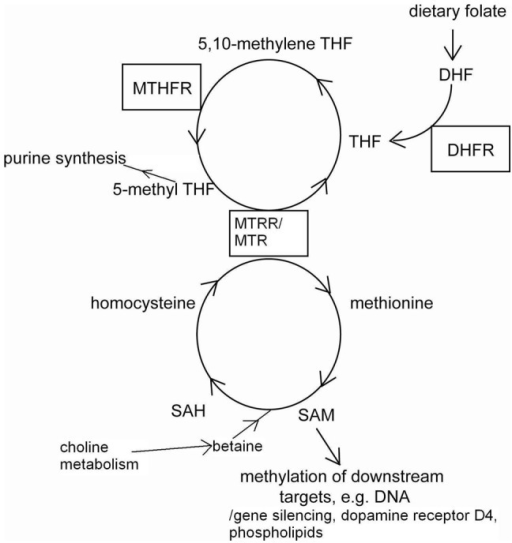
We need sufficient 5-MTHF to keep methionine synthase operating. Where does 5-MTHF come from? It's a form of folate that is produced by the enzyme methylene tetrahydrofolate reductase (MTHFR), and the gene that produces MTHFR has the same name. The body cycles through different forms of folate. Here's an illustration of that "folate cycle":
Folate metabolism gene 5,10-methylenetetrahydrofolate reductase (MTHFR) is associated with ADHD in myelomeningocele patients.
Spellicy CJ, Northrup H, Fletcher JM, Cirino PT, Dennis M, Morrison AC, Martinez CA, Au KS - PLoS ONE (2012) https://openi.nlm.nih.gov/detailedresult.php?img=PMC3515551_pone.0051330.g001&req=4
A deficiency in 5-MTHF can apparently be caused by at least three things:

1 - A deficiency in total folate diminishes the amount of 5-MTHF that can be made from other forms of folate.
  • Defective folate transport can result in autism spectrum disorders and other developmental disorders, and treatment with folinic acid (a form of folate) has been effective in in many children to reverse some autism symptoms. (https://www.ncbi.nlm.nih.gov/pubmed/26924398)
2 - MTHFR gene polymorphisms can decrease the ability of the body to produce 5-MTHF, production of which is catalyzed by the MTHFR enzyme, because the variant genes result in MTHFR enzymes that are more prone to being inactivated by heat. (https://www.ncbi.nlm.nih.gov/pubmed/10201405)
3 - High folic acid consumption causes a pseudo-MTHFR deficiency in mice and so might do the same in humans. (http://ajcn.nutrition.org/content/early/2015/01/07/ajcn.114.086603) Folic acid thus appears highly likely to be a sub-optimal form of folate for preventing 5-MTHF deficiency.
The third point is still controversial because there is research that has found folic acid prenatal supplements help prevent autism specifically where the MTHFR polymorphism associated with autism is present. (https://www.ucdmc.ucdavis.edu/publish/news/newsroom/6677). How does this square with the research I cited that finds autism risk appears to go up when there is excess folic acid? The key word is "excess." Our bodies can handle a little folic acid, but too much can get in the way of making 5-MTHF. I suspect folic acid does this by partially inhibiting the enzyme dihydrofolate reductase (DHFR), leaving more dihydrofolic acid (DHF) to get in the way of the MTHFR enzyme and thus cause a pseudo-MTHFR deficiency. 

Are we getting too much folic acid in the USA? I've come across articles about north American study populations that found unmetabolized folic acid in 40-95% of fasting study participants. (http://ajcn.nutrition.org/content/92/2/383.longhttp://jn.nutrition.org/content/145/3/520.short) From that, I conclude that many in north America are definitely getting more folic acid than they need.

Am I anti-folate? Not at all. Every woman should take measures to ingest enough folate if she thinks she could become pregnant in order to lessen the risk of neural tube disorders such as spina bifida. But I think folic acid is a terrible form of folate to be putting in everyone's food and multivitamins. Folate is available in many foods naturally and in other supplement forms, including actual 5-MTHF.

**This is one of a series of posts. Here are the links to each entry in the series.**

Introduction
Part 1
Part 2
Part 3
Part 4
Conclusion
Wednesday, March 29, 2017

It's time to end the autism epidemic (part 1)

Two weeks ago, a group of researchers published their findings about biological markers that can be used to a high degree of accuracy to predict the presence or absence of autism. In other words, they have deduced and tested a highly accurate "blood test" for autism. Here is the link to the entire report: http://journals.plos.org/ploscompbiol/article?id=10.1371%2Fjournal.pcbi.1005385.

Here is the abstract:

The number of diagnosed cases of Autism Spectrum Disorders (ASD) has increased dramatically over the last four decades; however, there is still considerable debate regarding the underlying pathophysiology of ASD. This lack of biological knowledge restricts diagnoses to be made based on behavioral observations and psychometric tools. However, physiological measurements should support these behavioral diagnoses in the future in order to enable earlier and more accurate diagnoses. Stepping towards this goal of incorporating biochemical data into ASD diagnosis, this paper analyzes measurements of metabolite concentrations of the folate-dependent one-carbon metabolism and transulfuration pathways taken from blood samples of 83 participants with ASD and 76 age-matched neurotypical peers. Fisher Discriminant Analysis enables multivariate classification of the participants as on the spectrum or neurotypical which results in 96.1% of all neurotypical participants being correctly identified as such while still correctly identifying 97.6% of the ASD cohort. Furthermore, kernel partial least squares is used to predict adaptive behavior, as measured by the Vineland Adaptive Behavior Composite score, where measurement of five metabolites of the pathways was sufficient to predict the Vineland score with an R2 of 0.45 after cross-validation. This level of accuracy for classification as well as severity prediction far exceeds any other approach in this field and is a strong indicator that the metabolites under consideration are strongly correlated with an ASD diagnosis but also that the statistical analysis used here offers tremendous potential for extracting important information from complex biochemical data sets.

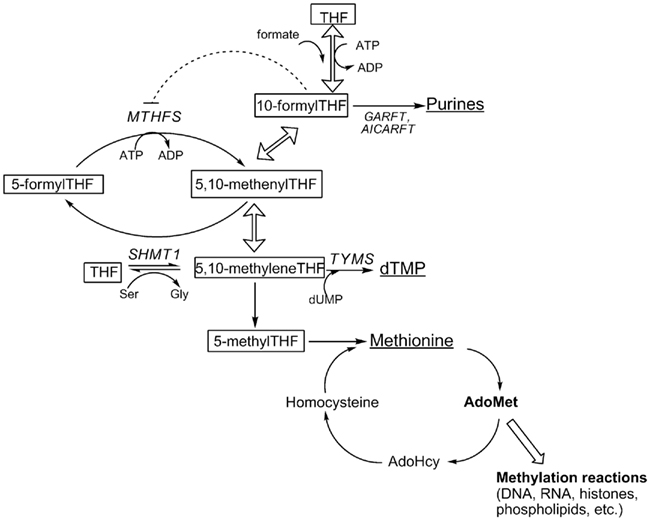
Here is a pictorial summary of folate-dependent one-carbon metabolism:


http://journal.frontiersin.org/article/10.3389/fgene.2011.00036/full
And here is an illustration of the transsulfuration pathway:

https://www.researchgate.net/figure/261328951_fig2_The-methionine-cycle-and-transsulfuration-pathwayNotes-Glutathione-synthesis-begins
Do you see where the two connect? It's at the part where methionine is converted in steps to homocysteine and then the homocysteine is recycled to methionine. The major homocysteine-to-methionine pathway is via the enzyme methionine synthase (MS).

In 2013, preliminary findings (due to the small study size) were reported that clearly indicated prematurely low levels of methionine synthase mRNA in autistic subjects' brains during their early years. (https://www.ncbi.nlm.nih.gov/pmc/articles/PMC3577685/) I highly recommend viewing the findings as graphically represented (here: https://www.ncbi.nlm.nih.gov/pmc/articles/PMC3577685/figure/pone-0056927-g005/) as they make it clear just how dramatic the difference is during crucial years in child development.

Why is the methionine-homocysteine cycle important in autism? Autism spectrum disorders are pervasive developmental disorders that are characterized by delays in multiple areas of development, and candidate genes for autism seem to constitute an ever-lengthening list. An influential theory currently is that epigenetic mechanisms are involved, particularly DNA methylation (https://www.ncbi.nlm.nih.gov/pmc/articles/PMC3955092/), which ties directly into the s-adenosylmethionine (AdoMet or SAMe) made from methionine (as illustrated above).

If a methionine synthase (MS) transcription deficiency can cause autism via epigenetic mechanisms, that suggests we need to efficiently and vigorously support the activity of whatever MS-associated activity is present. That is where getting the proper forms of folate and cobalamin (B12) comes in. I'll go more into detail on that tomorrow.

**This is one of a series of posts. Here are the links to each entry in the series.**

Introduction
Part 1
Part 2
Part 3
Part 4
Conclusion
Tuesday, March 28, 2017

It's time to end the autism epidemic (Introduction)

The evidence in the past few years continues to accrue, pointing to a defect in the methionine synthase homocysteine-to-methionine pathway as being behind the development of autism. In the next few days, I will lay out the evidence for how we address that problem and probably end the human-caused autism "epidemic" of the past couple decades.

1) Proper support of the methione synthase pathway requires having the right kinds of folate and cobalamin. In the pursuit of cheap and stable vitamin supplements, we have made a mistake using cyanocobalamin and folic acid. Those should be phased out in multivitamins and fortified foods as soon as possible and replaced with other, more appropriate forms of B12 and folate.

2) Glycine betaine should be a standard part of multivitamin formulations. It supports the betaine-homocysteine S-methyltransferase (BHMT) minor homocysteine-to-methionine pathway. The best way to get glycine betaine in the diet appears to be via ingestion of the water used in boiling beetroot and spinach, which is supported by the low autism rates found in places where such liquid is commonly included in regional cuisines, such as Poland (barszcz czerwony) and the Punjabi region (saag or palak puree).

I cannot emphasize strongly enough how disappointed and heartsick I am that modern medicine and health initiatives have, due to cost considerations, led to heavy mass usage of inferior forms of B12 and folate and consequently inflicted pervasive developmental disorders on so many children, including one of my own relatives. I love science, medicine, public health initiatives, proper vitamin use, and capitalism. Something went seriously awry in public health policy in many countries, and it's time to fix it.

**This is one of a series of posts. Here are the links to each entry in the series.**

Introduction
Part 1
Part 2
Part 3
Part 4
Conclusion

Saturday, March 25, 2017

Addressing one anti-vaccine alarmist

I have a family member I consider very intelligent, except on one point. She has bought into the "vaccines are a bigger risk than benefit" idea and promotes that persistently. She has two personal reasons for being set against vaccination, at least here in the USA where the risks are certainly lower for contracting polio than in, say, Syria. They are:

  1. Years ago, her neighbor lost a baby to sudden infant death syndrome (SIDS) right after the child was vaccinated.
  2. She did get a vaccination for her oldest child, and he had a febrile seizure afterward, which she blames on the vaccination.

I'll address each point.

1) Any SIDS death is tragic and too often unexplained. However, research statistics indicate that SIDS risk is neither increased nor decreased by vaccination. (https://www.ncbi.nlm.nih.gov/pubmed/22289512) SIDS appears correlated with breathing difficulties, particularly those related to mild upper respiratory infections and cigarette smoke (https://www.ncbi.nlm.nih.gov/pmc/articles/PMC1619535/?page=1https://www.nichd.nih.gov/sts/campaign/science/Pages/causes.aspx). Per the CDC, upper respiratory infections are not common side effects of any childhood vaccinations:
https://www.cdc.gov/vaccines/vac-gen/side-effects.htm.
Do you know what apparently can be a good source of upper respiratory infections? Going to the pediatrician's office, where there is a good chance of finding rhinovirus-shedding children. (http://www.today.com/moms/taking-your-healthy-kids-doctor-may-make-them-sick-2D12110565, https://www.ncbi.nlm.nih.gov/pubmed/20135827) Thus, regardless of vaccination, simply having gone to the pediatrician recently might conceivably have increased the chance of SIDS for my relative's neighbor's child.

2) A febrile seizure is associated with having a fever. ("Febrile" means having a fever.) Febrile seizures are relatively common, affecting up to 6.7% of children. (https://www.ncbi.nlm.nih.gov/pubmed/16510738) The fever after an immunization is a result of an immune response to the partial, weakened, or dead bacteria or viruses in the vaccine. Fever is a common side effect of nearly every available vaccine. (https://www.cdc.gov/vaccines/vac-gen/side-effects.htm). That is because fevers are part of a functioning immune system, and moderate fevers help save our lives when fighting infections. (https://www.ncbi.nlm.nih.gov/pmc/articles/PMC4786079/) Febrile seizures are more likely right after vaccinations (although not delaying vaccinations in toddlers results in a lower risk of febrile seizures: http://pediatrics.aappublications.org/content/pediatrics/early/2014/05/14/peds.2013-3429.full.pdf), but getting the vaccine-preventable illness is far more likely to result in febrile seizures if H1N1 is representative of what happens with infections generally. (https://www.ncbi.nlm.nih.gov/pubmed/26073015https://www.ncbi.nlm.nih.gov/pubmed/26553258) If one is certain that children will never encounter a vaccine-preventable illness, it is rational to not get the vaccine. But when is something like that certain? If one is wrong, and the child's immune system has to fight off the illness, there will likely be worse consequences--including febrile seizures--than the child would have suffered from the vaccine.

So is my relative right to treat vaccines as something she should avoid? Well, not with respect to the SIDS argument. But avoiding immunizations for her children probably has decreased the incidence of fevers and febrile seizures for her children, for she keeps a clean house and they haven't come down with measles, mumps, rubella, polio, etc. Their not having come down with vaccine-preventable diseases, however, is a result of her living in the USA, her own caution, and good luck. Next week a recently arrived traveler from Chicago could bring mumps to a school in her area, and her sons could end up with meningitis or decreased fertility as a result. I don't think her risk-benefit analysis has led her to the best decision for her family because she is unaware of how easily vaccine-preventable diseases can be brought to her orderly doorstep.

Wednesday, March 22, 2017

Silent, but not deadly

Today's topic is flatulence. Everyone passes gas. The trick is to have no one notice when it happens, which requires both silence and an absence of noticeable odor. Where does the offensive odor come from? Sulfur! Yes, brimstone (an archaic word for sulfur) really does deserve to be associated with imagined conceptions of hell. Specifically, hydrogen sulfide (H2S) correlates with the level of stinkiness of flatulence. (https://www.ncbi.nlm.nih.gov/pmc/articles/PMC1727181/)

Happily, we know how to bind H2S. Bismuth, zinc, iron, and nitrate are able to do so. (https://www.ncbi.nlm.nih.gov/pubmed/12927694) Nitrate is considered toxic, but the other three are commonly ingested by people. Bismuth is in Pepto-Bismol, and zinc and iron are in many foods and taken as vitamin supplements. Treatment with bismuth has been proven to bind fecal H2S in humans (http://www.gastrojournal.org/article/S0016-5085(98)70311-7/fulltext), but long-term supplementation with bismuth is possibly connected to encephalopathy; brain dysfunction is too high a price for me to pay to get rid of bad-smelling flatulence, so I won't run out and buy myself a bottle of Pepto-Bismol for that purpose. But zinc...that's in common use as a supplement, especially in connection with fighting colds, and appears relatively safe as long as one keeps zinc intake below 40 mg in a day. (https://umm.edu/health/medical/altmed/supplement/zinc) Moreover, the body has no specialized zinc storage system. People occasionally eat oysters, which are extremely high in zinc, and don't appear to be negatively affected by eating the oysters. Zinc is worth a try.

My husband's digestive system doesn't handle onions well. I was sad as a newlywed to realize that onions were going to have to be cut out of the household menu for his sake. And over time my gut bacteria seem to have altered so that I also have a hard time with onions now. This was a very unfortunate change to a woman who loves salsa. But then two days ago, I discovered from the studies cited above that H2S can be bound with easily obtained minerals, and so we experimented. Last night for dinner, we ate a packaged, reconstituted potato and onion soup that gave us both extraordinarily unpleasant gas about a year after our marriage. We adults took some chelated zinc right before eating the soup. We both had some gas today, but it didn't stink. Hurrah! We are fairly confident that the zinc helped us because our seven-year-old, who didn't get any zinc and did eat two bowls of the soup, had decidedly malodorous gas this morning.

Next step: Mexican food (well, American-style "Mexican" food, which really isn't the same thing as authentic Mexican food) with some zinc in our accompanying beverage. I really hope this works so that I can go back to cooking with onions.

Thursday, March 16, 2017

Natural remedies over the millennia

A promising trend I see on PubMed recently is a swelling of interest in and scientific research on natural compounds from herbs and foods that have been used by humans for thousands of years. There is relatively little profit motive for pharmaceutical companies to fund such research, so it has been neglected. There's certainly a need for new, patentable molecules designed to selectively inhibit certain processes in the body and to correct for genetic faults, but we have a lot of naturally occurring molecules to investigate, as well.

LDS people (Mormons) have scriptures that say

"And again, verily I say unto you, all wholesome herbs God hath ordained for the constitution, nature, and use of man— Every herb in the season thereof, and every fruit in the season thereof; all these to be used with prudence and thanksgiving.

But which herbs are wholesome? And for what conditions? Despite attempts to keep track of herbs and their effects for the past 5000 years, if Chinese oral tradition is accurate, humanity still has a long way to go in figuring them out.

Only 5000 years did I say? It looks like the Neanderthals might have been using natural remedies to treat their physical ailments well over 40,000 years ago:

"One of the most surprising finds, however, was in a Neanderthal from El Sidrón, who suffered from a dental abscess visible on the jawbone. The plaque showed that he also had an intestinal parasite that causes acute diarrhoea, so clearly he was quite sick. He was eating poplar, which contains the pain killer salicylic acid (the active ingredient of aspirin), and we could also detect a natural antibiotic mould (Penicillium) not seen in the other specimens.""Apparently, Neanderthals possessed a good knowledge of medicinal plants and their various anti-inflammatory and pain-relieving properties, and seem to be self-medicating. The use of antibiotics would be very surprising, as this is more than 40,000 years before we developed penicillin. Certainly our findings contrast markedly with the rather simplistic view of our ancient relatives in popular imagination."
http://popular-archaeology.com/issue/winter-2017/article/dental-plaque-dna-opens-new-window-on-neanderthal-life-ways

Reading that makes me think we should routinely reevaluate all the traditional remedies and "old wives' tales" to see whether new research has found out something indicating whether and how there might be something to those old uses of plants and other natural substances. (While we're at it, we should also probably stop maligning Neanderthals as stupid nonhumans if they were using penicillin intentionally that long ago.) Giving barley water a fresh look helped me see how molybdenum can help with migraines and nausea. Who knows what other real natural remedies we modern humans are missing?

Friday, March 10, 2017

No news is good news

My husband had MRI/MRA and ultrasound scans done this week, and next week he will get to wear a Holter monitor for 48 hours. He says he hasn't had any recurrence of the aphasia-like episode that happened two weeks ago.

Except for liking chocolate cake and Reese's peanut butter cups too much, he's always been quite good about eating healthily. Because we're LDS, he has never used harmful drugs, alcohol, tobacco, tea, or coffee. His blood pressure is normal. He's not overweight. He bicycles 25 miles/week (5 miles/day). He willingly drinks skim milk (which I think tastes too watery and can't generally stand).

The only apparent problems are his chronically elevated cholesterol--which appears to be genetic--and his grandfather having died at just 45 from heart disease. Genetics can be so unfair.

My husband is doing what he can diet-wise to address his cholesterol and triglycerides levels. He is taking a baby aspirin a day (and now getting tinnitus regularly as a side effect, so don't believe the websites that say baby aspirin is too low a dose to cause tinnitus--people differ in susceptibility). He is also taking red sage (dan shen) because it contains an ingredient that inhibits the same enzyme as do statin medications, and he has never been prescribed statins. His follow-up appointment with the neurologist isn't until May, and if he needs to address high cholesterol levels now, taking an herbal "statin" seems a logical way to go about it. He's eating far less dessert, bought a new bike helmet that is less likely to allow the helmet strap to press against his throat (don't want to irritate those carotid arteries...), and otherwise living life normally.

Monday, February 27, 2017

"That which cometh out of the mouth"

I have another new theory. No, it's not exactly received medical wisdom. That's what makes it new. :D

In the past few days, I've learned a lot about how atherosclerosis (plaques building up on artery walls) can lead to stroke. I had previously hazily envisioned strokes being caused by a blood clot that just magically appeared in the brain. To the contrary, the blood clot generally comes from somewhere besides the brain. Typically, an atherosclerosis-related stroke-causing blood clot originates in the carotid arteries, right at the point where the carotid artery divides into two arteries, the internal carotid artery and the external carotid artery. Atherosclerotic plaques build up in the vicinity of that "Y"-shaped fork, and rupturing of the plaques triggers formation of a blood clot which then moves up into the head and gets stuck in a smaller artery in the brain.

What causes plaques in the first place? An influential theory is that oxidized LDL cholesterol starts the process of atherosclerosis. (https://academic.oup.com/cardiovascres/article/68/3/353/309912/Oxidized-LDL-a-critical-factor-in-atherogenesis) My questions then are 1) how does the LDL get oxidized and 2) why does it cause plaques right at that carotid junction?

First I looked into what causes the oxidization. A major culprit behind oxidizing of LDL is hypochlorous acid produced by the enzyme myeloperoxidase, which uses hydrogen peroxide (H2O2) and a chloride ion (Cl-) to do so. (https://link.springer.com/article/10.1007/s12170-013-0291-3, https://www.ncbi.nlm.nih.gov/pmc/articles/PMC3315351/, http://onlinelibrary.wiley.com/doi/10.1002/biof.5520060208/abstract, http://atvb.ahajournals.org/content/20/7/1716.long?related-urls=yesl20/7/1716)

H2O2 is supposed to be broken down in our bodies by catalase, glutathione peroxidase, and peroxiredoxins. Glutathione peroxidase activity appears to decrease as we age. (https://www.ncbi.nlm.nih.gov/pubmed/18511755) It's not clear exactly why, but our ability to break down H2O2 with our saliva appears to go down by approximately half as we age (https://academic.oup.com/biomedgerontology/article/62/4/361/629357/Age-Related-Changes-in-Salivary-Antioxidant), which means that there is likely going to be some extra H2O2 in our mouths in our later years. Excess H2O2 is harmful to gum tissue (https://www.ncbi.nlm.nih.gov/pmc/articles/PMC4730038/), and in the gum tissue H2O2 can apparently diffuse in such a way as to end up in the jugular vein (https://www.ncbi.nlm.nih.gov/pmc/articles/PMC3745256/).

The jugular vein travels down through the neck, taking all the "used" blood from the head back to the heart. In the neck, the jugular vein is covered by the carotid sheath, which holds the jugular vein next to the carotid artery. My novel hypothesis is this:

Excess aging-related H2O2 from the mouth goes into the jugular vein and then makes its way over to the carotid artery next door, boosting the amount of oxidized LDL in the carotid artery just before it hits the "Y"-shaped fork, where the oxidized LDL hits the sides of the branching arteries and starts the process of forming atherosclerotic plaques. 

I think the weakest link in my theory is that I can't find a lot of clear proof that H2O2 can migrate from a vein into a neighboring artery; however, it does seem to be generally accepted that H2O2 diffuses through tissues:

It is now widely accepted that this low molecular weight molecule is utilized in metabolic regulation in ways similar to diffusible gases such as NO, CO, or H2S. Even more so, H2O2 is recognized as being in the forefront of transcription-independent signals, in one line with Ca2+ and ATP. H2O2 diffuses through tissues to initiate immediate cellular effects, such as cell shape changes, the formation of functional actomyosin structures, and the recruitment of immune cells.
https://www.ncbi.nlm.nih.gov/pmc/articles/PMC3979367/

I suppose this will have to suffice for now. It's time to go eat dinner with my family...a nice, low-fat, high-soluble-fiber, and antioxidant-full meal.

(I almost forgot to explain the title of my post. In Matthew 15:11, it is recorded that Jesus said, "Not that which goeth into the mouth defileth a man; but that which cometh out of the mouth, this defileth a man." My research above points to oxidizing substances from the mouth contributing to the formation of atherosclerotic plaques in the carotid arteries.)

Friday, February 24, 2017

Possible transient ischemic attack

My husband, who is barely "middle-aged," experienced something on Tuesday that appears to have been a transient ischemic stroke (TIA), which is considered a warning mini-stroke. He'll be getting a possible-TIA workup done at the hospital in the next few weeks, and he has begun taking a baby aspirin daily.

This is a man who is at a healthy weight and who cycles about 25 miles per week. He doesn't smoke, drink alcohol, or use drugs. He is, however, cursed genetically (his grandfather died at age 45 of an enlarged heart) and likes desserts and fast food pizza too much.

The episode happened within 24 hours of a daughter's birthday party, which featured triple meat pizza from Little Caesar's, birthday cake made with lots of butter, and ice cream. And we think he had an egg for breakfast the following morning. He has had high cholesterol and triglycerides for years, but he had hoped to stay healthy by dint of lots of exercise and fruits and vegetables. It looks as though he'll also have to largely cut out some favorite treats, too, though. :(

On the bright side, he did escape the illness I posted about last time.

Wednesday, February 15, 2017

H1N1?

Over the past five days, 6/7 family members have been struck with a cold or flu virus. Because it started with an intense sore throat for me, I thought it might be strep throat, but the tell-tale symptoms in the throat never showed up. What was weird was that instead of a bunch of coughing and sneezing initially, it started with a day of fatigue just lying in bed with no/little hunger. I found out last night that friends from our church congregation have confirmed H1N1 ("swine") flu. I compared H1N1 symptoms with the symptoms we have, and they seem to be a pretty good fit.

So life is on hold for us while everyone rests. Except for Daddy, who insists he'll escape it, we're self-quarantined at home. The heat is turned up, and the air humidifier is turned up. I'm also taking a lot of melatonin to see if it helps shorten the course of the illness. I felt better yesterday, so I stayed up to my normal time (past 11 pm). I ended up regretting that, so I don't think just taking melatonin is an adequate substitute for insufficient rest. The evidence I found last year did only point to melatonin being possibly helpful for avoiding ARDS (acute respiratory distress syndrome), and I have to admit, my lungs seem to be doing OK. So maybe there's merit still to my hypothesis, but right now I'm dissatisfied with anything that doesn't make me feel better immediately.

Friday, February 3, 2017

Another one out the door

I just submitted another medical hypothesis to the journal Medical Hypotheses this week. I put a lot of hours into it, and it's nice to be getting back into normal life now. I'll post a summary of the hypothesis after it is published.

Yesterday I turned in a pre-enrollment packet for child #4, who will be starting kindergarten in August. That is the same child who gave herself a haircut last month. It's hard to believe she'll be sitting quietly in a classroom and being a "pupil" six months from now. And I'll probably only believe it when I see it! She's a handful.

Thursday, January 19, 2017

Family life goes on

Last night my four-year-old used child-safe art scissors to hack off almost all the hair on the front of her head after we thought we'd gotten her safely to bed. She even cut off part of an eyebrow. It looks quite terrible. But I gave her a short bob haircut, and in a few months her hair should look cute again.

Part of me cried, and part of me worries what other foolish things she will do when I'm not looking. And part of me is resigned to this as inevitable. After all, when I was close to her age, I cut off some of a playmate's hair just before the little girl was scheduled for a professional photo session.

Tuesday, January 10, 2017

Putting dessert in the middle

As I was looking into adipocytes, ghrelin, acylation of ghrelin by GOAT, stomach pH in the fundus, etc., I started realizing that stretching out the stomach (i.e., eating past filling "full") is simply a bad idea no matter what one eats. Because my husband, one daughter, and I are displeased with our current weights, I came up with a sustainable way to avoid overfilling our stomachs quite so much.

I observed that we always ate dinner until satiated, and then we had dessert. Which meant we were overeating every night. Trying to go without dessert won't work, for my husband bikes to and from work and would feel cheated without any dessert. (Being an adult, he would have just eaten goodies independently afterward anyway.) Everyone else would feel cheated, too, to be honest.

People frequently debate whether to eat dessert first or last. I've never heard anyone say they eat it in the middle, though.

We're now eating our evening dessert right in the middle of dinner. First we eat vegetables. Then we bring out dessert and serve small portions of it to everyone who ate vegetables (I have to motivate the toddlers to eat squash somehow...). Last we eat the main dish and other side dishes. Everyone eats some of the main dish and sides, but they eat noticeably less because main dishes don't stimulate the appetite as much as a cookie does.

It feels a little odd to be offering ice cream before the entree, but it seems to be working at decreasing overeating. I'll give an update in a month about whether we're still doing it and what results we have seen.

Friday, January 6, 2017

Two Elbert Hubbard quotes

“The world is moving so fast these days that the man who says it can't be done is generally interrupted by someone doing it.” 

― Elbert Hubbard

Elbert Hubbard was an interesting man. While I don't agree with all his anarchist ideas, he said some very encouraging things in support of those who work to do good in their position in society, whatever it may be. Unfortunately, his life was cut short in the sinking of the Lusitania during WWI.

Here's another good quote from Hubbard:
One machine can do the work of fifty ordinary men. No machine can do the work of one extraordinary man.

Doesn't that just restore some hope after hearing gloomy predictions about people losing their jobs to robots and software? Everyone can be extraordinary at something.

Tuesday, January 3, 2017

New slide show on acetylcholine excess and depression

Last summer, I saw an article reporting that botox treatment for wrinkles sometimes results in a lessening of clinical depression symptoms. So I looked into depression and found that research in recent years points to the possibility that an excess of acetylcholine--which, incidentally, botox blocks--could be a root cause of depression. And then last month I was looking into depression again because of the mental health problems facing a friend's daughter and realized that an acidic mouth environment might get in the way of proper breakdown of acetylcholine in nearby regions of the head.

So, I made a PowerPoint presentation giving three basic, safe actions one could try in order to prevent a chronic excess of acetylcholine:

1) Keep the mouth from being too acidic.
2) Garden sometimes.
3) Try a low-choline diet for a few days.

Numbers one and two are good things to do for other reasons, too.

Here is the presentation:


Friday, December 30, 2016

Melatonin to lessen severity of colds

In my Christmas post, I mentioned using melatonin to lessen the severity of colds. Here's how I got to that idea:

Three years ago my older sister, a health-conscious woman who was only in her forties, came close to dying from acute respiratory distress syndrome (ARDS) after coming down with the flu over Christmas break, during which she overtaxed herself playing hostess despite being sick. To save her, the hospital staff put her in very expensive rotating bed that kept the fluid in her lungs from pooling in any one place in her lungs. (http://www.theindychannel.com/lifestyle/health/rotating-bed-credited-with-saving-lives) Why did she get so ill? How do we prevent such illness in the future?

In the near-century since the 1918 flu epidemic, which killed many otherwise healthy younger adults, researchers have come to realize that an immune system overreaction was a probable cause of many of those flu deaths. (https://www.sciencedaily.com/releases/2006/09/060927201707.htm) Many touted cures for colds (especially vitamin C) are promised to "boost the immune system," but when it comes to otherwise healthy people, they might be feeling terrible due to an already vigorous immune response.

A study a few years ago found that inoculating 17 healthy people with the flu virus resulted in only around half of them "getting sick" even though all of them showed some kind of immune response to the flu virus. (http://ns.umich.edu/new/releases/8511http://journals.plos.org/plosgenetics/article?id=10.1371/journal.pgen.1002234) Apparently, healthy people can sometimes fight off a virus without suffering from a week or two of the sniffles, sneezing, and coughing. So then my question became how? Because if I can forgo a week or two of Kleenex, I want to!

I looked into runny noses (rhinorrhea), the excess nasal discharge that generally starts clear then becomes nasty, thick stuff that messes with the sinuses. Histamine often causes runny noses, which is why people take anti-histamines for colds. Anti-histamines do help lessen severity of cold symptoms for a short time:
In adults, there is a short-term beneficial effect on severity of overall symptoms on the first or second day of treatment (45% felt better versus 38% with placebo), but there was no difference between antihistamines and placebo in the mid to long term. The effect of sedating antihistamines on rhinorrhoea and sneezing is too small to be relevant to the patient and involves a risk of side effects such as sedation (9% versus 5.2% with placebo). Trials in children were smaller and of lower quality and lacked evidence of effectiveness.

http://www.cochrane.org/CD009345/ARI_antihistamines-common-cold

There has got to be a longer term way to lessen severity of colds. I kept digging to see where the histamine was coming from, and came up with neutrophils, a kind of white blood cell. Neutrophils have been connected to exacerbation of allergy and bacterial lung infection:

In both models, depletion of neutrophils or neutrophil FcγRs protects mice from anaphylaxis. Amazingly, adoptive transfer of human neutrophils into the FcγR-deficient mice restored the response, suggesting that human cells can induce systemic anaphylactic reactions in response to IgG. In this model, anaphylaxis is mediated not by histamine but by neutrophil-derived platelet-activating factor, a known vasoactive lipid. By contrast, neutrophil-derived histamine is the major contributor to pulmonary allergic inflammation in chronic mycoplasma infection (). Neutrophils may also contribute to the sensitization phase of allergic skin diseases. This idea is suggested by the surprising finding that depletion of neutrophils protects mice from the development of contact dermatitis, which suggests that these cells are important in facilitating the development of allergen-specific T cell responses ().

https://www.ncbi.nlm.nih.gov/pmc/articles/PMC4277181/. Also see "Neutrophil histamine contributes to inflammation in mycoplasma pneumonia" at http://jem.rupress.org/content/203/13/2907.

A 2013 study found that influenza fatality could be prevented by reducing, but not removing, neutrophils. (http://www.cell.com/abstract/S0092-8674(13)00715-0) So how do we keep the number of neutrophils from getting too high without messing with the immune system as it carries out its necessary function of killing enemy bacteria and viruses? An answer appears to lie in preventing some of the neutrophils from having the extended lifespan they tend to have once burrowed into inflamed tissue. (http://isites.harvard.edu/fs/docs/icb.topic1445350.files/Neutrophil%20functions%20review.pdf, http://rheumatology.oxfordjournals.org/content/49/9/1618.full) It turns out that melatonin--made by the body and used regularly as an over-the-counter sleep aid--helps keep neutrophils from migrating into areas of tissue injury. (https://www.ncbi.nlm.nih.gov/pubmed/26031343) Giving melatonin appears to attenuate neutrophil inflammation and mucus secretion. (https://www.ncbi.nlm.nih.gov/pubmed/26303298https://www.ncbi.nlm.nih.gov/pubmed/25388990)

How do we help the body get more melatonin? The easiest way is to be in the dark, which stimulates the body's synthesis of melatonin; this is usually done by sleeping. Getting too little sleep is definitively connected to susceptibility to colds and respiratory illnesses. (http://jamanetwork.com/journals/jamainternalmedicine/fullarticle/414701, https://www.ncbi.nlm.nih.gov/pmc/articles/PMC4899278/, https://www.ncbi.nlm.nih.gov/pmc/articles/PMC4115328/, https://www.ncbi.nlm.nih.gov/pmc/articles/PMC3242683/, https://www.ncbi.nlm.nih.gov/pmc/articles/PMC3548567/) Exposure to light, especially blue light, suppresses melatonin production. (https://www.ncbi.nlm.nih.gov/pubmed/26017927) (This is why computers and phones now offer settings that block blue light at nighttime; I utilize those settings on my primary desktop and tablet.)

What if a person can't go hide in a dark cave the next time they sneeze a couple of times? Perhaps they have work, small children, or other pressing commitments that force them to stay awake. Taking a melatonin supplement would logically give part of the benefit of a good nap, in that it would lessen the lifespan of some neutrophils and decrease overall histamine production. Of course, it would probably be unwise to purposely take melatonin for this purpose if one already has a depressed immune system (e.g., patients going through AIDS, cancer treatment, etc.) However, melatonin is widely used and seems to be quite safe for most people. (http://www.mayoclinic.org/drugs-supplements/melatonin/safety/HRB-20059770)

A work colleague of my husband was telling me recently about his insomnia, for which he takes three kinds of melatonin on a rotating basis. The melatonin hasn't cured his insomnia, but he has had much stronger resistance to colds while taking it.

Wednesday, December 28, 2016

English translation of "Lulajze, Jezuniu" ("Lullaby, Jesus")

"Lulajze, Jezuniu" is a pretty, haunting Polish Christmas carol that dates back centuries. For Christmas, my church choir sang it. It's been translated into English a few times, but I made a few tweaks to better fit the music and our choir. Our choir accompanist improvised his own arrangement and put in short preludes and interludes. The second verse highlighted the voices of a mother and her two young daughters. It ended up being very nice, even with just an amateur choir performing it. Our music director said it was the loveliest number of the Christmas service.

If you'd like to add a new carol to your Christmas library, here is the version we used.  On the second and third verses, I indicated with all caps which syllables should have two notes sung to them for a pleasing rhythm.

Friday, December 23, 2016

Merry Christmas! Here are some hypotheses for your stockings!

I've had such a fun year doing research on intersections of nutrition, global cuisines, epidemiology, and medical advances. Here are what I consider the most valuable of the hypotheses I formulated in 2016:

1) Molybdenum in large-ish, as-needed doses can help alleviate (or even obliterate) migraines and nausea (at least nausea from travel, migraines, and stomach bugs). 

2) To delay dementia, work to lessen the amount of hydrogen peroxide in your mouth as you age, for the ability of saliva to break down hydrogen peroxide goes down with age. Fresh (or reconstituted dried) horseradish and daikon radish in the mouth help with that because of their high peroxidase content.

3) Some fetal malformations like those resulting from thalidomide might be caused by common vetch or nigella sativa (kalonji) consumption at inopportune moments during early pregnancy, for both of those contain compounds that interfere with angiogenesis (creation of new blood vessels from existing ones).

4) An excess of folic acid and cyanocobalamin disrupts the folate cycle and is linked to autism and ADHD (and who knows what else). Stick to forms of folate and B12 that naturally occur in foods instead of using folic acid and cyanocobalamin. Also include some betaine in your diet.

5) Manganese in skin care products seems like a good idea to fight acne.

6) Addictive behavior, including "falling in love," is the brain forming and working to promote the supremacy of efficient pathways to pleasure. To lessen the strength of unwanted pathways, look at reducing delta-fosB during withdrawal periods via ellagic acid; to form new pathways, look at manipulating c-fos via light at night, MSG, etc.

7) Food allergies seem less likely to occur in the presence of sufficient magnesium chloride, so use sea salt instead of straight NaCl (table salt). Maybe even try some Dead Sea salt, which is half MgCl. Also, look at other ways of supporting and not inhibiting RALDH2.

8) The licorice root in tobacco products might be behind the protective effect smoking has against Parkinson's.

9) Take a melatonin when you first start sneezing with a new cold. It helps neutrophils not dig into the inflamed tissue and live quite so long, which lessens cold symptoms because during neutrophils' lifetimes they pump out lots of histamine. I would only use melatonin for this purpose if you feel your cold is your immune system OVER-reacting to a virus.

10) Vary your diet and your vitamin supplements because of homeostasis, i.e., your body's adaptations over time to high, continuous amounts of any substance.

11) Endogenous hydrogen cyanide in the brain could be connected to seizures, especially epileptic grand mal seizures.

12) Carbon monoxide buildup in the leg muscles could be behind restless legs syndrome.

My two biggest wishes for 2017 research are to 1) help my nine-year-old daughter not be overweight (why her and not my other four daughters? what did I do differently when I was pregnant with her in South America that predisposed her to heaviness? and can I do anything to help her before she reaches puberty?) and 2) figure out a topical way to harness the immune system to fight skin cancers (biopsies and Mohs surgery aren't fun).

(Disclaimer: I do not prescribe the use of pharmaceutical drugs in any way. I am not a physician, and I reject out of hand any attempt to hold me liable for what boils down to a discussion of food. Any use of a molybdenum supplement should be prudent and guided by the tested tolerable upper intake levels for its usage (see http://lpi.oregonstate.edu/mic/minerals/molybdenum for those limits). Any use of an isolated molybdenum supplement during pregnancy should be under the direction of a medical professional as such supplements have apparently not been tested during pregnancy.)

Thursday, December 15, 2016

Update on molybdenum for migraines and nausea

Friends and family are starting to spread my hypotheses about molybdenum around. My father-in-law a few states away gave a bottle of molybdenum to a young woman that suffered from migraine-related nausea recently. He emailed me two days ago to say that she used molybdenum twice and it resolved her migraine-related nausea. Unfortunately, he forgot to ask her whether it helped with the migraines, too, although when I asked him, he said that she isn't currently suffering from a migraine. (If you want someone interrogated right, you've got to do it yourself....)

A local friend had her youngest child come down with projectile vomiting from a gastrointestinal virus last week. She gave molybdenum to everyone else in the family, and although others had lower GI tract symptoms, only one other person threw up (it was a teenager, and she stopped vomiting soon after taking more molybdenum). This friend is convinced that molybdenum kept her from ending up with the whole household vomiting.

I should probably keep a running tally of anecdotes of when molybdenum has shown effective for preventing or alleviating nausea and migraines. Here goes:
  • 3 women used molybdenum-rich diets and sulfite avoidance to lessen "morning sickness."
  • 1 woman used molybdenum (supplement) to end motion sickness-caused headache and nausea.
  • 2 women used molybdenum for relief from migraine-related nausea.
  • 3 households with multiple young children used molybdenum to stave off the vomiting due to gastrointestinal illnesses (all have found it's most effective to give molybdenum before the vomiting has begun, probably because it's harder to absorb molybdenum once vomiting has started).
  • 3 women used molybdenum to lessen or avoid migraine headaches (3 different etiologies of migraine headache: old neck injury, menstruation-related, and unknown trigger).
To be objective, I will also keep a tally of anecdotes where molybdenum has not shown any positive effect:
  • 1 teenage girl already suffering from a severe migraine. She took a molybdenum (given to her by a relative of mine), but she still ended up having to go to the hospital a few hours later. (I do not know her or her background, so I have no idea what is causing her headaches.) [Edit on 12/2/2017: My relative says she doesn't know whether the girl actually took the molybdenum. She gave it to the girl's mother and suggested she give it to her for the migraine, but she has no idea if the girl's mother ever gave it to her. So this is not a "no effect" anecdote after all.]
(Disclaimer: I do not prescribe the use of pharmaceutical drugs in any way. I am not a physician, and I reject out of hand any attempt to hold me liable for what boils down to a discussion of food. Any use of a molybdenum supplement should be prudent and guided by the tested tolerable upper intake levels for its usage (see http://lpi.oregonstate.edu/mic/minerals/molybdenum for those limits). Any use of an isolated molybdenum supplement during pregnancy should be under the direction of a medical professional as such supplements have apparently not been tested during pregnancy.)

Monday, December 12, 2016

Nigella sativa (black cumin, czarnuszka, etc.) also helps mice come off morphine addiction

I posted earlier about a study wherein it was observed that ellagic acid helped mice cope with coming off morphine. I came across another study from 2016 finding that thymoquinone, which is found in the spice nigella sativa (also called czarnuszka, kalonji, and black cumin), also helps mice come off morphine addiction:

Abstract
OBJECTIVE:
Dependence and tolerance are major restricting factors in the clinical use of opioid analgesics. In the present study, the effects of thymoquinone, the major constituent of Nigella sativa seeds, on morphine dependence and tolerance were investigated in mice.MATERIALS AND METHODS:
Male adult NMRI mice were made tolerant and dependent by repeated injections of morphine (50, 50, and 75 mg/kg, i.p. on 9 a.m., 1 p.m., and 5 p.m., respectively) during a 3-day administration schedule. The hot-plate test was used to assess tolerance to the analgesic effects of morphine. Naloxone (2 mg/kg, i.p.) was injected to precipitate withdrawal syndrome in order to assess the morphine dependence. To evaluate the effects of thymoquinone on tolerance and dependence to morphine, different single or repeated doses of thymoquinone were administered in mice. Rotarod was used to assess the motor coordination.RESULTS:
Administration of single or repeated doses of thymoquinone (20 and 40 mg/kg, i.p.) significantly decreased the number of jumps in morphine dependent animals. Repeated administration of thymoquinone (20 and 40 mg/kg, for 3 days) and also single injection of thymoquinone (40 mg/kg, on the fourth day) attenuated tolerance to the analgesic effect of morphine. None of the thymoquinone doses (10, 20, and 40 mg/kg) produced any antinociceptive effects on their own. Motor coordination of animals was impaired by the high dose of thymoquinone (40 mg/kg).CONCLUSION:
Based on these results, it can be concluded that thymoquinone prevents the development of tolerance and dependence to morphine.


Both studies were done in Iran, although in different cities. Why would Iran be so interested in morphine addiction? Because Iran apparently has the highest prevalence of opium addiction in the world. (http://www.irishtimes.com/news/world/middle-east/hooked-in-iran-where-addiction-rates-are-world-s-highest-1.1834386) Iran borders Afghanistan, the world's leading producer of opium. 

Nigella sativa is a peppery spice that is widely used in some of the same areas where opium is grown, so if it turns out to have a compound that can help end opium addiction, that would be convenient.

However, thymoquinone does appear to inhibit angiogenesis (https://www.ncbi.nlm.nih.gov/pubmed/18644991), which appears connected to fetal limb deformities per a prior post of mine, so pregnant women should probably avoid it (sorry, Bengali curry fans - http://www.bongcookbook.com/2007/10/myspice-kalonji.html).

Recent US news headlines on heroin say that overdoses now kill more people in the USA than do gun deaths. Many heroin addicts get started down the road to heroin use by becoming dependent on legitimately-needed prescription opiate medications after an injury or surgery. If ellagic acid and thymoquinone can help these people end their addiction to pain meds, perhaps they'll not go down the heroin road at all. One can hope.

Tuesday, December 6, 2016

C-fos at night

Being exposed to light during what should be our "night" appears to elevate c-fos levels in the mammalian brain, per a 1990 study:
Photic information entrains a circadian pacemaker located in the suprachiasmatic nucleus (SCN) of the mammalian hypothalamus to environmental light/dark cycles. To determine whether light regulates c-fos gene expression in the SCN, we have measured c-fos mRNA levels in the SCN of the golden hamster. We report that, during the subjective night, light causes a rapid increase in levels of c-fos mRNA in the SCN. Light pulses of 5 min duration are sufficient to induce c-fos mRNA, and the highest mRNA levels occur 30 min following the onset of light. The minimum level of illumination required to induce an increase in c-fos mRNA is indistinguishable from the minimum irradiance that produces a phase shift in the hamster's circadian rhythm of activity. In addition, the induction of c-fos mRNA in the SCN by light is itself under circadian regulation. Light induction of c-fos mRNA occurs only during the subjective night, at circadian times when photic phase shifting of activity occurs. Taken together, these data suggest that c-fos may be a molecular component of the photic pathway for entrainment of mammalian circadian rhythms.

https://www.ncbi.nlm.nih.gov/pubmed/2116813

If elevated c-fos is connected to the creation of addictive neural assemblies in the brain (briefly discussed in the preceding post), then being exposed to light during what should be our sleeping period might increase the possibility of becoming addicted to whatever pleasurable thing we are doing while up at night.

Why do casinos keep the lights on constantly? Is it just so that casino patrons don't notice how much time they've been inside gambling, or have the casinos observed an increase in gambling addiction-like behavior as a result of their exposing their patrons to light when the patrons ought to be in bed?

Why are night owls more prone to addictive disorders than early risers? (https://www.ncbi.nlm.nih.gov/pubmed/26250146) Is it because they are engaged in their addictions when their bodies should be asleep?

Being an evening person, rather than a morning person, was recently found to be linked to a higher risk of becoming addicted to smartphones in German adolescents. (https://www.ncbi.nlm.nih.gov/pubmed/27499228) Is that because the evening people are more likely to have a smartphone shining in their faces when they should be asleep?

All very interesting. It almost makes me want to go to bed earlier. Actually, why don't I? I can read in the early morning just as easily as in the late evening. Perhaps it's time to make my bedtime firm.