Wednesday, August 14, 2013

Indonesia Week

Last week was our last week of "summer break", so we studied our last country: Indonesia. We watched videos on the internet and from the library about Indonesia, I cooked some chicken coconut curry with yellow rice one night, and the girls had some library books about Indonesia to read. Otherwise, we didn't do much due to health issues.

The whole family learned so much focusing on one country/state per week during this summer break. Getting to try food from different parts of the world was great fun and stretched my cooking skills. We plan to do this again next summer!

Sunday, August 11, 2013

Dorothy Sayers and TLTOL (part seventeen)

Back to Dorothy Sayers and her essay, "The Lost Tools of Learning". The next segment I'll cover is the following paragraph:
It is difficult to say at what age, precisely, we should pass from the first to the second part of the Trivium. Generally speaking, the answer is: so soon as the pupil shows himself disposed to pertness and interminable argument. For as, in the first part, the master faculties are Observation and Memory, so, in the second, the master faculty is the Discursive Reason. In the first, the exercise to which the rest of the material was, as it were, keyed, was the Latin grammar; in the second, the key- exercise will be Formal Logic. It is here that our curriculum shows its first sharp divergence from modern standards. The disrepute into which Formal Logic has fallen is entirely unjustified; and its neglect is the root cause of nearly all those disquieting symptoms which we have noted in the modern intellectual constitution. Logic has been discredited, partly because we have come to suppose that we are conditioned almost entirely by the intuitive and the unconscious. There is no time to argue whether this is true; I will simply observe that to neglect the proper training of the reason is the best possible way to make it true. Another cause for the disfavor into which Logic has fallen is the belief that it is entirely based upon universal assumptions that are either unprovable or tautological. This is not true. Not all universal propositions are of this kind. But even if they were, it would make no difference, since every syllogism whose major premise is in the form "All A is B" can be recast in hypothetical form. Logic is the art of arguing correctly: "If A, then B." The method is not invalidated by the hypothetical nature of A. Indeed, the practical utility of Formal Logic today lies not so much in the establishment of positive conclusions as in the prompt detection and exposure of invalid inference.

Until recently, I was wondering how I would know that my oldest child was beginning to transition from the "Poll-Parrot" stage to the "Pert" stage, which would let me know that I needed to start transitioning my Trivium-influenced instruction of her from Grammar to Dialectic. She seemed quite rooted and content in the Grammar stage, and it seemed that it might be another year or more before I had anything to say on the subject of the second year of the Trivium, that is, the Dialectic.

Then a few weeks ago, dd8 started showing an ability to analyze that she had previously lacked. On an embarrassing topic, of course. She looked up from her DK Big Book of Knowledge page on human reproduction and said, "Mommy, I know why males have to be bigger than females. It's so that they can...", and her childish guess at the mechanics of human intercourse followed. I responded with one of those honest-answers-to-her-question-without-telling-her-more-than-she-needs-to-know-at-her-age and then deflected her to a discussion of nonhuman mammalian intercourse for my own nerves' sake. So sue me for being a cowardly procrastinator. Deflection is a valuable tool, and she is only eight years old. Can she just apply her new-found analytical abilities to doing her laundry properly now?

As for the pertness, that's starting to show up, too. Last week, when I told her to set plates on the table for a meal, she asked "How many?" I responded, "One for each person." She then got a little smart-alecky look on her face and asked, "One for each person in the family or one for each person in all of [our city]?" The Besserwisserchen*.

I have some logic workbooks, and I plan to cover formal logic with her. But I will wait until she is fully ready for the Dialectic stage. We still have lots to cover while she is in the last part of the Grammar stage.

*German for a little smartypants.

Friday, August 9, 2013

Back to School

I wrote up the girls' school schedules last night and posted them on the bookcase with the school books. Then I sorted the school books and put them into slots depending on which child will be using them this year. I'm almost ready for Monday.

There is a used curriculum sale (free for vendors and buyers!) in my area tomorrow where I hope to pick up some more materials in the subjects of Colorado History, Art History, Printing practice (i.e., copywork), English (having a variety of reading textbooks on hand is helpful), and Music (song collections for children). It would be great if I could also pick up an activity book for volume 4 of Story of the World. I don't really need more in most of these subjects, but it would make my life easier and keep me off the computer quite as much if I could locate a few good finds.

Sunday, August 4, 2013

England Week & Germany Week

The last two weeks were dedicated to learning about England and then Germany. However, both countries got neglected due to visits by relatives, a very large family reunion, and illness. We did watch a lot of Paddington Bear videos during England Week. Last week we watched several German cartoons on YouTube (there are some lovely Grimm fairy tales on this channel), and on Friday we finally got out of the house and made it to a German bakery for German chocolate and baked goods (I am simply not brave enough to cook with lye, which is necessary to make real pretzels).

Thursday, August 1, 2013

Jackie Chan Adventures

During our China Week, I let the children watch a season of Jackie Chan Adventures on Netflix. They love the show, and so I've been letting them watch the rest of the series. The little girl, Jade, always wants to go on adventures with Jackie Chan, her uncle, but he usually says, "No, Jade, you have to go to school/read your school book/do schoolwork/etc." She answers back, "But isn't it better to have this real experience and learn from it?" I agree with Jade wholeheartedly. :) Except for the getting-herself-into-dangerous-situations and general-disobedience-despite-dealing-with-ruthless-enemies, I applaud her fictional character's ability to sneak herself into real-life learning experiences.

Monday, July 29, 2013

Third Grade Testing Results

I finally retrieved the test results for dd8; she took the CogAt/ITBS as a third grader a few months ago. The results: she excels at science and problem solving, still hates basic math operations and so struggles to do them quickly, and has a solid foundation in basic language arts skills. Oh, and she doesn't listen very well (...like we needed a test to tell us that...why listen to her parents when she has more interesting things going on inside her head?).

No matter how many times I point out that she'll be hindered in her scientific pursuits by her poor calculation skills, she still finds math facts boring and oppressive and doesn't want to apply herself to learning them. In the two weeks left before formal school starts, I'm going to find a video game that she loves and that will firmly fix basic arithmetic facts in her head! I need a game with the Kratt brothers or cute baby sloths or wild felines; she doesn't care about fairy tale scenes or space invaders. Anyone know of a game that would fit the bill for us?

Update: My husband has a work-provided iPad that he often brings home at night, so I downloaded some free apps for her to use in this never-ending quest to not hate math facts. She has to play them for at least an hour a day for the next two weeks. Poor child, I know.

Tuesday, July 23, 2013

Not already!!

My children's charter school sent out an email today inviting us to sign up for beginning-of-the-school-year parent-teacher conferences. Crazy. We still have nearly three weeks of our summer plans, thank you. But we'll squeeze in the conferences as we did accept the obligation.

Sunday, July 21, 2013

Minnesota Week

Because it's important to learn about our own country, too, we dedicated one week this summer to learning about Minnesota. The choice was easy: my husband's parents live there, and they came to visit us this past week. We ate tater tot hotdish (casserole) and bars (cookies baked in, not on, a pan) but didn't try to make lefse, seeing as we lack an enormous griddle and other specialized equipment. We watched How to Talk Minnesotan on YouTube and laughed at ourselves saying "you bet" and "whatever". We got Swedish meatballs at IKEA in honor of the Scandinavian settlers of Minnesota. But we didn't do much serious intellectual work. We were pretty much on vacation from schoolwork. Uff da!

Thursday, July 18, 2013

Back in the Classroom?

I know teachers are just humans, and I think there are many great public school teachers. I don't link to this article to criticize all teachers but rather because I dislike how the school district resolved it: this teacher should not be interacting with high school students again so soon. There is no reason to think he won't engage in the same behavior on the sly again. And yet some still wonder why many parents don't feel they can trust the public school system with their children....

Sunday, July 14, 2013

Australia Week

What a great country to study! Australia has such unique wildlife and so much material accessible to us because it is in English! Here are some of the things we did to celebrate "Australia Week":

  • Check out and read/view library books and DVDs (about aborigines, British convicts, Great Barrier Reef, etc.)
  • Netflix: The Rescuers Down Under, The Man From Snowy River, Strictly Ballroom, Wild Kratts episodes about kangaroos and Tasmanian devils
  • Food: Pavlova, Vegemite, oatmeal cookies, meat pie, carrot/cheese/raisin salad, fish & chips, Lamingtons 
  • Dress up as marsupials 
  • Culture: Have a playdate with an Australian friend, who showed us a kangaroo skin and bullwhip and shared a late morning "tea" of Australian-style sandwiches (creamed corn/baked beans and cheese inside!) and lemon cordial (I used this recipe as the basis and substituted citric acid for tartaric acid)
  • Craft: Aboriginal dot art
  • Music: Listen to Australian aboriginal musica and folk songs, make a didgeridoo with PVC pipe and decorate it with permanent marker
  • Computer resources - http://www.abc.net.au/abcforkids

Friday, July 12, 2013

Pavlova

We've been learning about Australia this week. I tried two times to make a pavlova meringue. The first time it came out much too flat. But the second time I used a recipe that had been altered to work at a high altitude, and we were all very pleased with the result! Here's a picture:
Now imagine that rosy beauty filled with whipped topping and covered with fresh berries, and that's what we had for dessert last night. Multiculturalism can be very tasty!

Monday, July 8, 2013

Russia Week

We finished "Russia Week" on Saturday. Here are some of the things we did to learn about Russia:

  • Library books and DVDs about/set in Russia
  • Netflix: The Hunt for Red October, Peter and the Wolf (animated short film), Space Dogs, Michel Strogoff (cartoon), Man v. Wild (2.08, 2.09), Happy People: A Year in the Taiga, Fiddler on the Roof
  • Color Russia map and country flag
  • Do Highlights puzzle book about Russia
  • Crafts: Matryoshka paper dolls (from this website - http://www.activityvillage.co.uk/russian_dolls.htm), flower garland headbands (finally found a use for my wedding bouquet!)
  • Sport: Ballet (we have a DVD that shows a short ballet lesson geared toward small children)
  • Food: Lox/cream cheese on bagels, pelmeni (I cheated and used frozen pirogis), cabbage and pickled beet salad, Polish chocolate (similar to Russian), rassolnik (barley-potato-pickle-broth soup), jello with sour cream in it, berry juice blends, rich Russian cake (the buttercream frosting had a pound of butter in it!)
  • Music: Listened to many Russian folk songs
It was a great week! Since the U.S. Independence Day fell during Russia Week, we made red-white-and-blue flower garlands and watched The Hunt for Red October; I was struck with how different a world we live in now that the Cold War is over and Lithuania (home of the Red October's defecting submarine captain) is an independent country.

Friday, July 5, 2013

Paper Matryoshka dolls

Here's the finished product from the craft found at the link in the previous post:


Matryoshka dolls

Much as I would love to make actual matryoshka dolls, I don't have a lathe or woodworking skills. So for a Russia Week craft, we're doing this cute paper doll matryoshka craft I found online: http://www.activityvillage.co.uk/russian_dolls.htm

If my children's efforts turn out well, I'll post a picture later.


Tuesday, July 2, 2013

Philippines Week

Mabuhay! Last week we learned about the Philippines. Among other things, we did the following:

  • Use lots of library books and DVDs (they know me well at the library this summer)
  • Music: Listen to music from the Philippines on Grooveshark
  • Food: Buy/prepare Filipino food from Asian market, including champorado, lumpia, halo-halo, and pancit
  • Culture: Invite a Filipina friend over to talk about her life as a child in the Philippines, dance the tinikling (done with bamboo poles)
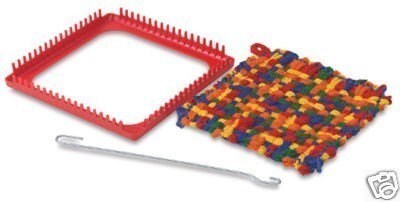
  • Craft: Make pastillas de leche, do some weaving (square loom like this)
  • Color flag and map of the Philippines
  • Sport: Swimming lessons

Friday, June 28, 2013

Russian Food Ideas?

Next week is "Russia Week", and it's been hot. I don't want to bake or make soups. What to feed my children that is Russian....

I am planning to make blinis with cream cheese and smoked salmon atop. (Knowing my children, I won't even waste money on caviar!) I've got apricot jam and pickled vegetable jars to crack open, although I know my children won't be too interested in the beets. I know they'll eat eggs, cucumbers, bread, cheese, tomatoes, potatoes, and pirogi, so I guess that's what we'll be eating for most of the next week. I hope I can find some berries on sale somewhere. For herbs, time to use up the cilantro in the fridge and find some dill weed instead. And for drinks, vodka is totally out, but I bet my children will enjoy some sweetened, iced herbal tea.

Any suggestions from readers as to what to eat that is typically Russian on a hot summer's day? (In a house with no AC running?)

Wednesday, June 26, 2013

Yes, Virginia, there is a slippery slope.

In the wake of today's Supreme Court opinions, I am disheartened. Some Facebook friends rejoice in what they perceive as equality winning the day by among other things, posting an image of Bert and Ernie against the backdrop of a red equals sign. Thanks for turning an fun, innocent friendship (Bert and Ernie always had separate beds) from a children's show into a sexual relationship. Sigh. I understand where my friends are coming from--our jurisprudence for the past few decades as well as a massive cultural shift made these outcomes nearly inevitable--and there is some cruel behavior towards homosexuals which should be discouraged. I believe that we can genuinely love people while not condoning all their actions, but some critics of homosexuality clearly don't and have done horrid things (Westboro Baptist Church, for example).

Furthermore, I believe that we humans are more than our bodily impulses, especially our sexual ones, and that redefining the institution of marriage as is currently happening further loosens both reasonable and religious restraints on sexual intimacy. Despite the sexual revolution and modern medicine's advances, STDs remain dangerous and spread exactly as the name indicates. Those who study the Bible know that Jesus taught we should avoid even lustful thoughts and that both Jewish law and the early Christian apostles taught that we should not engage in homosexual acts. Why do we as a society place so much importance now on giving in to sexual urges? What happened to the ideals of self-control and platonic friendship? In current U.S. culture, two women can't live together as mutually supportive, dear friends without being "in love", while couples who can't be sexually intimate are justified in divorce, per Pat Robertson. What happens to children's legal rights to be with their parents (by definition, at least one of a child's biological parents is generally excluded from that child's day-to-day life in a same-sex family) when marriage includes homosexual couples? I guess my thoughts seem hopelessly outdated, but I will not give up my conviction that there is far more purpose and joy in seeking and following God's will rather than embracing hedonism.

One of the primary arguments against permitting the redefinition of marriage to include same-sex marriage has been that it would allow for the eventual legalization of polygamy. This "slippery slope" argument has been roundly mocked and treated as impossible and alarmist. But what seems "impossible" now can become reality surprisingly fast. When Congress passed DOMA, it seemed unnecessary to most because U.S. culture considered gay marriage "out there"; civil partnership laws were just beginning to gain acceptance back then, which really wasn't so long ago. The Supreme Court's holding today in U.S. v. Windsor upholds the nearly exclusive right of a state to pass its own laws relating to marriage and strikes down a federal law that did not even forbid same-sex marriage. DOMA "impose[d] a disability" on same-sex couples, and that was enough to invalidate it. In the wake of Windsor, there is literally no legal justification to uphold a law such as the federal Edmunds Act of 1882, which made polygamy a felony. The federal government may not make laws invalidating a state's laws on marriage absent an infringement by the state on a fundamental right.

Polygamists are going to push hard now for societal sanction of their relationships. They have even more to gain from legalization of their marriages then do gay marriage advocates because they have been risking imprisonment and the removal of their children by child welfare authorities. The same media entities that helped normalize homosexual relationships have already been doing the same thing for polygamy. Just in the past few years, we've had Big Love and Sister Wives. And let's not forget the immigrant communities in the USA that quietly continue their traditional polygamous practices. They will likely also fight for legal status now that it appears attainable.

I do not support legal recognition for plural marriage. First, once an arbitrary limitation on numbers to a marriage is taken away, marriage will cease to be indistinguishable legally from a business partnership and spousal benefits (like SSA, tax treatment, health insurance, etc.) will slowly disappear as they become financially problematic. Second, I think polygamy--polygyny to be specific--deprives a wife of her husband's companionship to an intolerable degree. Yes, I know, ironic stance for a Mormon, eh? But our doctrine does not require plural marriage. In fact, the Book of Mormon teaches that polygamy is an abomination except when the Lord commands it to "raise up seed" (see Jacob 2:23-30), which He did in Old Testament times and for about 50 years in the 1800s. Thanks to modern science and early feminism successes, we latter-day women do much more with our lives than serve as too-often-short-lived baby-making machines and pawns in property exchanges.

My non-support of an elastic definition of marriage is unlikely to make any difference in what actually happens. I believe in the rule of law and accept the will of the people and stare decisis, no matter my preferences. I point out, though, to Virginia and 49 other states that the slippery slope argument against same-sex marriage was a valid argument and we can now fully expect to go down that slope as a nation.

Tuesday, June 25, 2013

China Week

Last week our topic of study was China. While it's impossible to cover such a large country fully in just a week, our children are pretty young, so we think the following activities gave them a decent overview of China:
  • Numerous library books and DVDs about China (both fiction and nonfiction)
  • Netflix resources: Wild China, Kung Fu Panda sequels, Jackie Chan Adventures (the last was set in the US, but still contains much related to Chinese culture)
  • Find all animals at our local zoo that live in China (there turned out to be only a few)
  • Food: Eat with chopsticks; shop at an Asian market (live fish!); cook dimsum, egg rolls, and noodles; and drink milk substitutes (almond, rice, and coconut milks)
  • Culture: Host two Chinese women for a day (one was a specialist in ancient Chinese calligraphy and taught our children a lot about Chinese characters)
  • Craft: Make a Chinese gong, make paper, and make (and try to fly) kites
  • Religion: Learn about Tibetan Buddhism from a family friend, who led us in a short guided meditation and helped me cook "Buddha's Delight"
  • Computer: Chinese fables on starfall.com
We had a great time and ate well. I have a lot of leftover Chinese food this week, but since we're studying the Philippines, which has a large Chinese population, it won't go to waste!

Sunday, June 16, 2013

Ecuador Week

In case you were wondering about the two most recent posts, we were just learning about Ecuador last week. Llamas hail from the Andes, part of which runs through Ecuador, and Panama hats are from Ecuador, despite the misleading name.

Here's a summary of what we did during our Ecuador Week:
  • Read/watch library books and DVDs about Ecuador
  • Find a llama (surprisingly easy to locate in Colorado nowadays)
  • Culture: Invite an Ecuadorian-American couple over for dinner (I made seco de pollo and cured my own red onions in salt and lime juice for the salad!)
  • Food: Cook empanadas de pina, arroz colorado, and arroz con leche (this website is a great resource for Ecuadorean cooking)
  • Craft: Braiding hair, learn about Panama hats, make little figures out of migajon clay (white bread and glue) and paint them
  • Sport: Soccer with cousins
  • Music: Sing anthems of Ecuador and Guayaquil, make and play an antara flute
  • Religion: Tour the interior of a Catholic church
  • Netflix: Man vs. Wild (2.05), Voices of the Andes

Thursday, June 13, 2013

Llama

I saw this handsome fellow today.

Wednesday, June 12, 2013

Homemade Panama Hat

Dd6 came up with this a few minutes ago. It does provide shade!

Tuesday, June 11, 2013

Canada Week

This summer we're doing little formal schoolwork. What we're doing instead is learning all about a different country or U.S. state each week. Last week we learned about Canada. Here is a list of what we did to learn about Canada:

  • Read/watch miscellaneous library books and DVDs about Canada
  • Read aloud of an easy adaptation of Anne of Green Gables
  • Go to the zoo and identify animals that live in Canada
  • Color the Canadian flag and a map of Canada (easy to find these on the internet)
  • Food: maple syrup, butter tarts, apple juice, currants, poutine 
  • Culture: Invite a Canadian-American friend over and have her share a little about Canada with us
  • Watch some shows that take place in Canada (Dudley Do Right, Red Green Show)
  • "Reverse curling" on the garage floor (freeze disk of ice with a pipe cleaner handle in it, and use chalk to draw the skip)
  • Go camping in the U.S. Rockies (they are fairly similar to Canadian Rockies as to vegetation, appearance, and wildlife)
  • Craft: Make cheese curds for poutine (I ended up doing this one alone, my kids having shown no interest in it)
  • Computer: free time to play on websites Poisson Rouge and UpToTen since they are bilingual French/English sites
  • Listen to Inuit music, Canadian folk music, and Great Big Sea (a Canadian folk-rock band know for sea shanties) (Grooveshark was a good resource for finding much of this music)

Sunday, June 2, 2013

Paper

Earlier today: "Mom, we need more white paper. There's none left in the drawer. Or in the printer tray."

Tonight from the three-year-old as I try to sort paper and throw away (after photographing!) my children's creations and recycle their used paper with blank sides into the printer tray: "Mommy, don't throw any of my artwork away!"

How did people raise children before the invention of inexpensive paper?

And why did the three-year-old take a nap? It's past ten o'clock and she insists she's not tired yet. I am.

Thursday, May 23, 2013

Dorothy Sayers and TLTOL (part sixteen)

In this next segment of "The Lost Tools of Learning", Dorothy Sayers finishes her description of the Grammar stage and discusses the subject of theology for the student in that stage:

So far (except, of course, for the Latin), our curriculum contains nothing that departs very far from common practice. The difference will be felt rather in the attitude of the teachers, who must look upon all these activities less as "subjects" in themselves than as a gathering-together of material for use in the next part of the Trivium. What that material is, is only of secondary importance; but it is as well that anything and everything which can be usefully committed to memory should be memorized at this period, whether it is immediately intelligible or not. The modern tendency is to try and force rational explanations on a child's mind at too early an age. Intelligent questions, spontaneously asked, should, of course, receive an immediate and rational answer; but it is a great mistake to suppose that a child cannot readily enjoy and remember things that are beyond his power to analyze--particularly if those things have a strong imaginative appeal (as, for example, "Kubla Kahn"), an attractive jingle (like some of the memory-rhymes for Latin genders), or an abundance of rich, resounding polysyllables (like the Quicunque vult).
This reminds me of the grammar of Theology. I shall add it to the curriculum, because theology is the mistress-science without which the whole educational structure will necessarily lack its final synthesis. Those who disagree about this will remain content to leave their pupil's education still full of loose ends. This will matter rather less than it might, since by the time that the tools of learning have been forged the student will be able to tackle theology for himself, and will probably insist upon doing so and making sense of it. Still, it is as well to have this matter also handy and ready for the reason to work upon. At the grammatical age, therefore, we should become acquainted with the story of God and Man in outline--i.e., the Old and New testaments presented as parts of a single narrative of Creation, Rebellion, and Redemption--and also with the Creed, the Lord's Prayer, and the Ten Commandments. At this early stage, it does not matter nearly so much that these things should be fully understood as that they should be known and remembered.

I don't have much to add on the first paragraph. I ask very little in the way of memorization from my children. Sometimes I worry that my laziness in that realm will hurt my children, but most of the time memorization is just not on my mind at all. They already learn all sorts of facts and songs from multitudinous library books, church, part-time school, library videos, various websites, language arts textbooks, and so on, but I feel I might be missing a valuable opportunity to help them commit to memory verses and sayings that will enrich their entire lives. I hereby resolve to print out something profound and put it on the refrigerator tonight and have my children read it three times a day until they have memorized it. OK, actually, I'll be putting up "A Purple Cow". A mom has to start somewhere on the Gilbreth path.

As to theology, that's easy to teach. Every school day the children who can read are assigned a set amount from the scriptures (one page for dd8 and a half page for dd6), and I discuss with them or have them narrate what they read. Because we are LDS, "scriptures" means The Book of Mormon, The Holy Bible, The Doctrine & Covenants, and The Pearl of Great Price. I don't use secondary materials (i.e., purchased lesson plans and activity books and such), and the Bible is the King James Version. I explain archaic words and confusing situations to them as needed, and they learn both doctrine and older English. 

They also go to church on Sundays and learn in Primary (the LDS Church's program for children) from great teachers and leaders. In addition, I tell them a scripture story every night. We just started making our way through a terrific Children's Illustrated Bible that I got at a garage sale for only $1 on Saturday; the stories are paraphrased in a straightforward way, and they are accompanied on the side by related maps and pictures of historical artifacts.

We also briefly cover the beliefs of non-Christian religions and cultures as we get to them in our history and geography studies. Greek gods and goddesses are a fount of fun stories. When we were studying ancient Israel, we had our own Seder, or Passover dinner. I've also been able to introduce my children to some Hindu religious dance and music through a nearby college's Balinese Gamelan performances.

Sunday, May 19, 2013

Successful experiment for dinner!

Ever since we were newlyweds, my husband and I have often had funny and/or disappointing culinary experiences due to my tendency to dispense with the straitjacket of a recipe in favor of experimentation. The first time he really suffered from it was when I cooked one of his favorite dishes from his mother's recipe collection: Turkey Tetrazzini. Except I altered it to use olive oil instead of butter. For health reasons, you know. He was not amused.

But tonight I went complete recipe-less and made up a new dish that borrowed a little from chicken adobo (the Philippine national dish). I used the crockpot, so it required minimal labor. And my husband really liked it! He happily served himself seconds. He complimented the dish without my having to ask him how he liked it! Whew! After the avocado shakes last week that no one liked and which I had to turn into avocado chocolate cake (not too bad, actually, thanks to numerous chocolate chips and chocolate frosting), it was great to have a culinary success. :)

Here's my recipe if you want to try it -

Put the following in a crockpot:

  • A big bunch of bok choy, cleaned and sliced into bite size pieces
  • 1-2 lbs uncooked chicken (I used three chicken thighs)
  • 1 can water chestnuts (drained)
  • approx. 1/3 cup soy sauce
  • approx. 2 tsps minced garlic
  • 2 cups water
  • 2 cubes chicken bouillon
  • 2 ginger tea bags (I've had ginger herbal tea bags floating around in my spice drawer since I tried them for nausea relief during my last pregnancy)

Cook on high for 4-5 hours.

Serve over cooked rice.

Super simple, very tasty. And that's according to a guy from the Midwest who doesn't generally appreciate spicy food or untested food combinations involving exotic ingredients.