Monday, July 8, 2013

Russia Week

We finished "Russia Week" on Saturday. Here are some of the things we did to learn about Russia:

  • Library books and DVDs about/set in Russia
  • Netflix: The Hunt for Red October, Peter and the Wolf (animated short film), Space Dogs, Michel Strogoff (cartoon), Man v. Wild (2.08, 2.09), Happy People: A Year in the Taiga, Fiddler on the Roof
  • Color Russia map and country flag
  • Do Highlights puzzle book about Russia
  • Crafts: Matryoshka paper dolls (from this website - http://www.activityvillage.co.uk/russian_dolls.htm), flower garland headbands (finally found a use for my wedding bouquet!)
  • Sport: Ballet (we have a DVD that shows a short ballet lesson geared toward small children)
  • Food: Lox/cream cheese on bagels, pelmeni (I cheated and used frozen pirogis), cabbage and pickled beet salad, Polish chocolate (similar to Russian), rassolnik (barley-potato-pickle-broth soup), jello with sour cream in it, berry juice blends, rich Russian cake (the buttercream frosting had a pound of butter in it!)
  • Music: Listened to many Russian folk songs
It was a great week! Since the U.S. Independence Day fell during Russia Week, we made red-white-and-blue flower garlands and watched The Hunt for Red October; I was struck with how different a world we live in now that the Cold War is over and Lithuania (home of the Red October's defecting submarine captain) is an independent country.

Friday, July 5, 2013

Paper Matryoshka dolls

Here's the finished product from the craft found at the link in the previous post:


Matryoshka dolls

Much as I would love to make actual matryoshka dolls, I don't have a lathe or woodworking skills. So for a Russia Week craft, we're doing this cute paper doll matryoshka craft I found online: http://www.activityvillage.co.uk/russian_dolls.htm

If my children's efforts turn out well, I'll post a picture later.


Tuesday, July 2, 2013

Philippines Week

Mabuhay! Last week we learned about the Philippines. Among other things, we did the following:

  • Use lots of library books and DVDs (they know me well at the library this summer)
  • Music: Listen to music from the Philippines on Grooveshark
  • Food: Buy/prepare Filipino food from Asian market, including champorado, lumpia, halo-halo, and pancit
  • Culture: Invite a Filipina friend over to talk about her life as a child in the Philippines, dance the tinikling (done with bamboo poles)
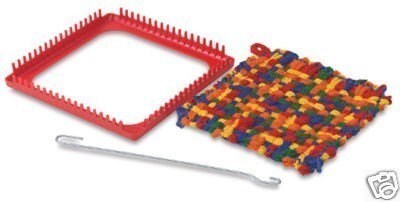
  • Craft: Make pastillas de leche, do some weaving (square loom like this)
  • Color flag and map of the Philippines
  • Sport: Swimming lessons

Friday, June 28, 2013

Russian Food Ideas?

Next week is "Russia Week", and it's been hot. I don't want to bake or make soups. What to feed my children that is Russian....

I am planning to make blinis with cream cheese and smoked salmon atop. (Knowing my children, I won't even waste money on caviar!) I've got apricot jam and pickled vegetable jars to crack open, although I know my children won't be too interested in the beets. I know they'll eat eggs, cucumbers, bread, cheese, tomatoes, potatoes, and pirogi, so I guess that's what we'll be eating for most of the next week. I hope I can find some berries on sale somewhere. For herbs, time to use up the cilantro in the fridge and find some dill weed instead. And for drinks, vodka is totally out, but I bet my children will enjoy some sweetened, iced herbal tea.

Any suggestions from readers as to what to eat that is typically Russian on a hot summer's day? (In a house with no AC running?)

Tuesday, June 25, 2013

China Week

Last week our topic of study was China. While it's impossible to cover such a large country fully in just a week, our children are pretty young, so we think the following activities gave them a decent overview of China:
  • Numerous library books and DVDs about China (both fiction and nonfiction)
  • Netflix resources: Wild China, Kung Fu Panda sequels, Jackie Chan Adventures (the last was set in the US, but still contains much related to Chinese culture)
  • Find all animals at our local zoo that live in China (there turned out to be only a few)
  • Food: Eat with chopsticks; shop at an Asian market (live fish!); cook dimsum, egg rolls, and noodles; and drink milk substitutes (almond, rice, and coconut milks)
  • Culture: Host two Chinese women for a day (one was a specialist in ancient Chinese calligraphy and taught our children a lot about Chinese characters)
  • Craft: Make a Chinese gong, make paper, and make (and try to fly) kites
  • Religion: Learn about Tibetan Buddhism from a family friend, who led us in a short guided meditation and helped me cook "Buddha's Delight"
  • Computer: Chinese fables on starfall.com
We had a great time and ate well. I have a lot of leftover Chinese food this week, but since we're studying the Philippines, which has a large Chinese population, it won't go to waste!

Sunday, June 16, 2013

Ecuador Week

In case you were wondering about the two most recent posts, we were just learning about Ecuador last week. Llamas hail from the Andes, part of which runs through Ecuador, and Panama hats are from Ecuador, despite the misleading name.

Here's a summary of what we did during our Ecuador Week:
  • Read/watch library books and DVDs about Ecuador
  • Find a llama (surprisingly easy to locate in Colorado nowadays)
  • Culture: Invite an Ecuadorian-American couple over for dinner (I made seco de pollo and cured my own red onions in salt and lime juice for the salad!)
  • Food: Cook empanadas de pina, arroz colorado, and arroz con leche (this website is a great resource for Ecuadorean cooking)
  • Craft: Braiding hair, learn about Panama hats, make little figures out of migajon clay (white bread and glue) and paint them
  • Sport: Soccer with cousins
  • Music: Sing anthems of Ecuador and Guayaquil, make and play an antara flute
  • Religion: Tour the interior of a Catholic church
  • Netflix: Man vs. Wild (2.05), Voices of the Andes

Thursday, June 13, 2013

Llama

I saw this handsome fellow today.

Wednesday, June 12, 2013

Homemade Panama Hat

Dd6 came up with this a few minutes ago. It does provide shade!

Tuesday, June 11, 2013

Canada Week

This summer we're doing little formal schoolwork. What we're doing instead is learning all about a different country or U.S. state each week. Last week we learned about Canada. Here is a list of what we did to learn about Canada:

  • Read/watch miscellaneous library books and DVDs about Canada
  • Read aloud of an easy adaptation of Anne of Green Gables
  • Go to the zoo and identify animals that live in Canada
  • Color the Canadian flag and a map of Canada (easy to find these on the internet)
  • Food: maple syrup, butter tarts, apple juice, currants, poutine 
  • Culture: Invite a Canadian-American friend over and have her share a little about Canada with us
  • Watch some shows that take place in Canada (Dudley Do Right, Red Green Show)
  • "Reverse curling" on the garage floor (freeze disk of ice with a pipe cleaner handle in it, and use chalk to draw the skip)
  • Go camping in the U.S. Rockies (they are fairly similar to Canadian Rockies as to vegetation, appearance, and wildlife)
  • Craft: Make cheese curds for poutine (I ended up doing this one alone, my kids having shown no interest in it)
  • Computer: free time to play on websites Poisson Rouge and UpToTen since they are bilingual French/English sites
  • Listen to Inuit music, Canadian folk music, and Great Big Sea (a Canadian folk-rock band know for sea shanties) (Grooveshark was a good resource for finding much of this music)

Sunday, June 2, 2013

Paper

Earlier today: "Mom, we need more white paper. There's none left in the drawer. Or in the printer tray."

Tonight from the three-year-old as I try to sort paper and throw away (after photographing!) my children's creations and recycle their used paper with blank sides into the printer tray: "Mommy, don't throw any of my artwork away!"

How did people raise children before the invention of inexpensive paper?

And why did the three-year-old take a nap? It's past ten o'clock and she insists she's not tired yet. I am.

Sunday, May 19, 2013

Successful experiment for dinner!

Ever since we were newlyweds, my husband and I have often had funny and/or disappointing culinary experiences due to my tendency to dispense with the straitjacket of a recipe in favor of experimentation. The first time he really suffered from it was when I cooked one of his favorite dishes from his mother's recipe collection: Turkey Tetrazzini. Except I altered it to use olive oil instead of butter. For health reasons, you know. He was not amused.

But tonight I went complete recipe-less and made up a new dish that borrowed a little from chicken adobo (the Philippine national dish). I used the crockpot, so it required minimal labor. And my husband really liked it! He happily served himself seconds. He complimented the dish without my having to ask him how he liked it! Whew! After the avocado shakes last week that no one liked and which I had to turn into avocado chocolate cake (not too bad, actually, thanks to numerous chocolate chips and chocolate frosting), it was great to have a culinary success. :)

Here's my recipe if you want to try it -

Put the following in a crockpot:

  • A big bunch of bok choy, cleaned and sliced into bite size pieces
  • 1-2 lbs uncooked chicken (I used three chicken thighs)
  • 1 can water chestnuts (drained)
  • approx. 1/3 cup soy sauce
  • approx. 2 tsps minced garlic
  • 2 cups water
  • 2 cubes chicken bouillon
  • 2 ginger tea bags (I've had ginger herbal tea bags floating around in my spice drawer since I tried them for nausea relief during my last pregnancy)

Cook on high for 4-5 hours.

Serve over cooked rice.

Super simple, very tasty. And that's according to a guy from the Midwest who doesn't generally appreciate spicy food or untested food combinations involving exotic ingredients.

Friday, May 17, 2013

A new blog in town

Dd6 has decided that she wants a blog, too, so she started Space Facts. Feel free to comment here on anything you think she would find good fodder for her blog!

Saturday, May 11, 2013

Well, that explains something...

With respect to the issue of my last post, why has nearly every news network (besides Fox) been giving the Obama administration a pass on its lies with respect to the attack on our consulate in Libya last year? Would you believe the presidents of ABC and CBS news have siblings working in the White House? And the CNN Washington bureau chief is married to one of Clinton's deputies. No wonder most of the national press has been doing such a terrible job of publishing certain news stories and providing objective analysis for the past few years.

Saturday, May 4, 2013

Thoughts on Benghazi

Background: I left the Foreign Service in 2007 to take care of my growing family and because I'd been told my career would be harmed if I didn't do a dangerous, unaccompanied tour in Baghdad or Kabul. I was told this while a breastfeeding, working mother doing all I could to meet both family and work obligations. In joining the State Department, I signed up for a civilian job, not to work in a war zone. I accepted "worldwide availability" and served with a good will in two polluted, high-crime cities during my time with the State Department. In my resignation letter to Secretary Condoleezza Rice, I noted that Foreign Service career requirements were no longer within the bounds of what one expects in a civilian job. State's bureaucracy chose to categorize my resignation as "for family reasons" and not deal with my complaint about sending diplomats to overly dangerous areas.

Forward to six months ago: We had State Department personnel in an under-protected consulate in Benghazi, Libya who were attacked, and we lost some dedicated people. For some unknown but likely political reason, administration spokespeople (specifically Susan Rice from State) tried to blame the attack on a spontaneous crowd protesting a video on YouTube rather than telling the truth about it having been terrorism (on September 11th...imagine that...). The previously unknown maker of that video was quickly arrested and is still sitting in jail in the USA for a probation violation.

Few in the mainstream media have kept talking about what happened in Benghazi because it is clear that the Obama administration doesn't want to talk about it. A White House spokesperson recently said "it happened a long time ago" (six months), and Hillary Clinton in January passionately said in a Congressional hearing, "What difference at this point does it make?" (right after again downplaying the terrorism aspect of the attack by trying to make the Benghazi attack sound as though it could have been spontaneous). I admit to having started to think that maybe those still talking about Benghazi were just doing it for political reasons. I was wrong. Benghazi is a big deal in that it reveals 1) ineptitude and dishonesty at the highest levels of the current administration, and 2) a lack of courage at the highest levels of the current administration when faced with an urgent need and then a failure to protect individual Americans at our diplomatic posts abroad.

My change of mind on Benghazi came from reading this CBS article from November 1, 2012. No, this isn't Fox news or Glenn Beck. Yes, somehow, I missed it back in November. Apparently, we had an interagency task force designed to deal with events like the attack on our Benghazi consulate. But it wasn't convened. Apparently, we had an ability to send a rescue team to the consulate within four hours, but we didn't use it. Instead, the administration dithered. Apparently, counterterrorism officials knew almost immediately that the attack was a terrorist attack, but Susan Rice fed the nation a lie about it being a spontaneous crowd reaction to a video.

I have many former colleagues whose service in dangerous areas I respect and honor. I fear that our President and his highest officials do/did not similarly honor them. They have shown they cannot make tough decisions quickly to protect State Department civilians under attack. They have shown that they will lie about the circumstances of such attacks to the nation. The State Department definitely leans left and Democrat, but that didn't get its employees treated right by Obama or H. Clinton when it really counted. Of course, our executive branch should meet its responsibilities to all its employees, no matter their political leanings, but if even a supportive department like State gets its employees abandoned during a terrorist attack and then is used to disseminate lies domestically for political reasons, the current Presidential administration deserves to be the recipient of greatly diminished trust in its integrity and abilities.


Monday, April 22, 2013

Science Fair Time

Dd8 seemed to need guidance on picking a subject, so I asked her (for my own culinary purposes) to see what effect soaking whole wheat grains in different liquids would have on their subsequent sprouting. She made observations over the course of several days (including weighing, which wasn't very informative due to the water involved in sprouting), and we found out that vinegar and salt water will pretty much kill off the sprouts. Tap water yielded good sprouts, and Brita-filtered tap water was even more productive.

Dd6 had to be dissuaded from mashing a variety of kitchen items (flour, sugar, bananas, etc.) together and "seeing what happens". She eventually came up with (on her own, bless her stubborn little heart) a project where she blew a whistle at a flag with various objects placed in front of the whistle. She learned that air flow can be hard to predict. :)

I like science fair projects. Now that we have computers, making the displays is a cinch. I type in what they tell me, and they glue the printed words and other eye-catching materials on a posterboard. Sure, sometimes my kids need more adult assistance with their projects than teachers think (or hope?) they will.* However, this annual ritual gives my children a chance to plan their own experiments and make their own observations at home where there is no "right answer". (Not that I'm above telling them if their conclusions are nonsensical....) Proper experiments can be quite difficult to plan and carry out. Just making sure that observations are accurate requires some knowledge about what can be measured and how best to do it. I think that my children's beginning efforts in doing science experiments will give them a greater knowledge of both the power and limits of scientific experiments.

* No worries, my children won't be getting awards they don't deserve due to my assistance. Their projects and posterboards aren't really competitive, based on what I've seen at their school in the past. And surely a project where Mom helped is better than a project that didn't get done at all because of a child's fears and indecision. This is just elementary school! Still, I look forward to when they can go solo on these projects.

Saturday, April 13, 2013

Standardized Testing Done!

And we don't have to do it again for two more years. I finally mailed it off yesterday, and I look forward to seeing the results. I know it won't all be great news--she got 0% on one section of the CogAT because she didn't understand the directions, but we weren't required to do that test anyway--but based on what I saw, I think she probably did well on the reading and science sections of the ITBS. Both of her parents are avid readers who keep her well stocked with science books from the library, so that's not unexpected.

I'm glad I had the experience of seeing dd8 take a standardized test. I now understand better why teachers complain about high-stakes accountability tests. Kids can "have a bad day", react poorly to the pressure of being timed, or just not care how they do on a test that has little relation to their interests. That doesn't mean I'm an advocate of abolishing testing now, just that I sympathize with them about some of their concerns. In my ideal world, every child would regularly receive short, periodic assessments that would be used to tailor instruction to the child as well as to measure his/her progress. Such testing can be a useful tool for parents, teachers, and administrators, as well as give the child an incentive to do his/her best on the test so as not to be placed at an instructional level that is too low and thus "boring".

Friday, March 22, 2013

Ouch!

I'm almost done administering the ITBS to my third-grader. Once she got used to the pacing, she did fairly well. I was apprehensive about the math segments, though, because she has been very resistant about doing arithmetic. Math concepts, she gets and likes. Arithmetic invites sighs, attitude, and massive resistance. However, because she can tell she understands the math and performs well in other subjects, we've had years of her acting as though Mom's admonitions to learn her math facts fast are not all that important.

Thank you, ITBS, for forcing her to see how behind she is on developing her calculation skills. I just reviewed her math concepts test, and she only missed one out of 22 questions. But she only did half the problems in all the other math sections (which caused her to need a crying break in her room after the first time it happened), and on the last one, math computation, she filled in the bubbles for less than half of the problems and got a third of those wrong (some quite simple, which brought me to tears).

It seems to me that she has literally wired her brain to temporarily shut down and then move like cold molasses on basic addition and subtraction questions because they are not interesting or fun to her. She's only eight, and I am trying not to despair. I feel like I have already tried every math fact resource, but to be honest, I've avoided math fact family triangles. They seemed hokey to me. But I'll do it for her. This hurdle must be cleared somehow.

Thursday, March 21, 2013

Homeschool Carnival

The Carnival of Homeschooling is up for this week at momSCHOOL. I really appreciate the work of those who put together the carnival each week so that I can learn from other homeschooling families.

Friday, March 15, 2013

Thoughts on Home Birth

Some people, unbelievably, still seem to think that homeschoolers are either like the "quiverful" Duggars or hippies living off the grid and eating/wearing organic whenever possible. We're religious, but my girls go to public school part-time and wear pants most of the time. We try to eat and live healthily, but I vaccinate my children, give birth in the hospital, and buy whatever produce I can afford without worrying about whether it's organic.

When I embarked on the adventure of childbearing back in 2004, my husband and I took a Bradley childbirth class in the Philippines. We read books by Dr. Sears and Ina May Gaskin. We determined to do everything possible to avoid a C-section, partly because of what we were learning and partly because of the fact that I had decided to opt out of returning to the USA to give birth and didn't want to undergo major surgery in the Philippines (among other concerns, my blood is Rh-negative, which is uncommon in Asia). Since I have low blood pressure and pass out easily from needles (good-bye, epidural, not going to mess with you...), information on giving birth without pain medication was quite welcome. 

However, despite having a sister and good friends who homebirth, I have never felt like that was a good choice for me personally. I know of too many things (like eclampsia, postpartum hemorrhage, shoulder dystocia, cord prolapse, placental abruption, cord wrapping issues, maternal heart attack, fourth-degree tears, obstructed labor, uterine rupture, life-threatening but previously unknown physical abnormalities in the infant that require life support measures followed by surgery as soon as possible--this happened to my nephew--and infant respiratory issues--meconium aspiration contributed to the death of an infant cousin of mine--just to name a few) that can unexpectedly go wrong and need the prompt medical attention available in hospitals.

A year ago, I found out that an acquaintance of mine, who had been due to deliver her baby a month before mine, lost the baby after a home birth attempt. There is no doubt that this was a previously healthy baby who died as a result of birth complications that could not have been dealt with outside a hospital. The experienced midwife had reason to think that the baby was in an oblique breech position but decided to go ahead with the home birth; she even brought student midwives so they could see the birth. After an excruciating labor that went on too long and during which their midwife discouraged them from going to the hospital, my friend and her husband finally went to a hospital where their baby, who was most likely the victim of a cord prolapse, was born by C-section. However, because he had been deprived of oxygen for an hour during labor, he suffered extensive brain damage and passed away after being taken off life-sustaining machines. The heartbreak that she and her family did and do suffer is immense. The midwife, who I assume was also greatly saddened by the baby's death, had an official complaint lodged against her and no longer practices midwifery here in Colorado.

While I once praised home birth, I now hold a negative opinion about both the practice of home birth and the legislative choice of many states to permit minimally-qualified (i.e., neither nurses nor doctors) midwives to attend out-of-hospital births. Even experienced, highly-knowledgeable midwives sometimes face unanticipated situations that require immediate remedies which they cannot provide, and those who practice a healing art outside hospitals should attain a high level of education and supervised training, such as occurs in nursing and medical schools. As I've been following this issue for the past year, I've learned that Colorado has a high (compared to hospitals) death rate for home birth attempts with non-CNM midwives. Today I found out that out-of-hospital birth attempts in Oregon result in a 6-8-fold increase in the rate of intrapartum and neonatal demise of full-term babies. Here is part of the testimony about this, the entirety of which is online at https://olis.leg.state.or.us/liz/2013R1/Downloads/CommitteeMeetingDocument/8585:

Oregon now has the most complete, accurate data of any US state on outcomes of births planned to occur in the mother’s home or an out of-hospital birth center.
***
On the 1st row, you can see that nine babies died during or soon after labor in homes or birth centers.
The total mortality rate for planned out of hospital births was 4.5 per thousand, as seen in the last column of that row.
I have included the number of neonatal deaths both with and without the death of one baby who died of congenital abnormalities. That death cannot be attributed to the care given by the DEM attendant.
The 2nd row shows data on deaths associated with planned OOH births with direct-entry midwives as the planned birth attendants.
The total mortality rate associated with those births – excluding the one involving congenital abnormalities – is 4.8 per 1000.
For comparison, data on births planned to occur in hospitals is provided in the bottom row of the table. [The 2012 mortality rate in Oregon for term births planned to be in the hospital is 0.6/1000.]
Note that the total mortality rate for births planned to be attended by direct-entry midwives is 6-8 times higher than the rate for births planned to be attended in hospitals. The data for hospitals does not exclude deaths caused by congenital abnormalities.
Many women have been told that OOH births are as safe or safer than births in hospitals. This is true in some places, including British Columbia.
But out-of-hospital births are not as safe as births in hospitals in Oregon, where many of them are attended by birth attendants who have not completed an educational curriculum designed to provide all the knowledge, skills and judgment needed by midwives who practice in any setting.

I'm not an OB/GYN, nor do I work for one. Sure, my dad was a family doctor who delivered some babies in his day, but there are no surgeons in my immediate family. To make four TMI stories short, I have experienced four non-medicated births in hospitals in three different countries. I am a natural childbirth success story. (I'm not sure I can really take credit for that, for I come from "childbearing stock"; my mom had ten children vaginally--the first one was breech--and all six of my sisters have had multiple children with nary a section required.) I'm all for supporting women who want to move while giving birth, eschew epidurals, engage in natural methods of relaxation during labor, breastfeed, room-in, etc. I have no financial motive to make midwifery look bad. The mortality statistics sadly speak for themselves. Midwife-attended home birth, at least as practiced currently in my state and Oregon, unnecessarily and significantly increases the risk of a helpless baby dying. To me, the life of a precious child weighs far more heavily in the balance than the short-term comforts of giving birth in one's own home.

Do I persuade or do I offend in writing this post? And if the latter, what has happened to the natural childbirth culture if someone expressing concern about practices that contribute to avoidable infant loss is considered offensive?

Sunday, March 3, 2013

Dorothy Sayers and TLTOL (part fifteen)

The next segment of Sayers' essay, "The Lost Tools of Learning", is about science and mathematics:

Science, in the Poll-Parrot period, arranges itself naturally and easily around collections--the identifying and naming of specimens and, in general, the kind of thing that used to be called "natural philosophy." To know the name and properties of things is, at this age, a satisfaction in itself; to recognize a devil's coach-horse at sight, and assure one's foolish elders, that, in spite of its appearance, it does not sting; to be able to pick out Cassiopeia and the Pleiades, and perhaps even to know who Cassiopeia and the Pleiades were; to be aware that a whale is not a fish, and a bat not a bird--all these things give a pleasant sensation of superiority; while to know a ring snake from an adder or a poisonous from an edible toadstool is a kind of knowledge that also has practical value.
The grammar of Mathematics begins, of course, with the multiplication table, which, if not learnt now, will never be learnt with pleasure; and with the recognition of geometrical shapes and the grouping of numbers. These exercises lead naturally to the doing of simple sums in arithmetic. More complicated mathematical processes may, and perhaps should, be postponed, for the reasons which will presently appear.

I have four children now, and because I don't want big messes, I rather discourage physical collections. Blame the four months I spent as an au pair/housekeeper in Germany back in my college years, but clutter depresses me. However, I think my science practices are basically in line with Sayers' educational philosophy because I encourage my children to read nonfiction books about science all the time. Do they really need to have pinned butterflies on cards to learn about the natural world? I think it's adequate to have a supply of engaging science books ready at hand and read them to my children on occasion. They get hooked and before you know it, they are reading DK's Big Book of Knowledge in bed at night instead of fairy tales. Besides providing science books, I also show my children science videos (they love Bill Nye and the National Geographic videos starring Dustin Hoffman as a globe named "Spin"), and when the weather is nice we go to the zoo and nature centers.

Math. Amen, Dorothy. Help them memorize those math facts as young as possible. Dd8 is still struggling to get to automaticity with her addition facts, while dd6 consistently outdoes her in addition drills on their daily Xtra Math practice sessions. Dd8 can memorize poems, no problem, but I think I waited too long to get serious about requiring her to memorize the addition facts and contributed to her developing a math facts mental block.

I wish I could buy a Barney or Dora DVD that helped children sing and memorize the basic addition facts. Computer math games haven't worked because my children want to have fun when they play on the computer, and math fact recall is not yet easy enough to be "fun" for them. Besides games and flashcards, I could find only lame math fact song collections or number "appreciation" cartoon DVDs.  I'm positive my children would appreciate numbers more if they could use them with greater facility! If someone from Nick Jr. is reading this, I beg you to produce a good addition fact memorization DVD using Diego and exotic animals; the same goes for PBS and the Dinosaur Train characters. 

Wednesday, February 27, 2013

Some random fun

Even when there are holidays and snow days for the local schools, I have my children do their home school work. That meant that last week they had five days of learning while their friends had just three. Dd8 was starting to give off a "put-upon" vibe, and I was getting weary of the taskmaster role, so yesterday afternoon, I made them a little "clue-chase" for no reason except to show them I love them and I'm not "all work and no play". These were the clues:


Clue #1:
To find where Number 2 is hid
Look under a bear that is pallid.   
[This led to dd6's favorite teddy bear.]

Clue #2:
Tigers have stripes just like the wall
By the drawer in which Clue 3 did fall.

Clue #3:
Number 4 is not in the land down under,
But Sydney says it is resting beside her.   
[Sydney is dd6's betta fish that she got for her birthday recently.]

Clue #4:
The globe downstairs points to the hiding place
Of the next-to-last clue in this clever word race.

Clue #5:
Now up, up stairs to your parents’ closet
Is a teeny-weeny present for you red-headed set.  
[Oops, should have double-checked that one for grammar....]

Treasure:
[A little travel chess game that I'd been keeping for them when they got bigger. I guess they're "bigger" now.]

On a side note, I made sure that my clues rhyme. I don't think much of poetry that doesn't even try to rhyme.  Rhymes simply flow better and are easier to remember, while "modern", non-rhymed poetry (esp. that created in school) seems the product of wanna-be visionaries seeking shortcuts to the imagination via awkwardly disjointed prose.

Thursday, February 14, 2013

Happy Valentine's Day!

Because we all just love math, here's an update on the math portion of our home education endeavor:

Dd8 is finally starting multiplication and division in earnest. She finds it conceptually easy. We haven't started drilling multiplication and division facts yet because she is still doing the addition practices on the Xtra Math website. Xtra Math is a great resource for kids who need daily repetition and practice of math facts but balk at long sessions. It costs nothing, keeps track of individual children's progress, and makes math drills relatively pleasant without a lot of screen clutter.

Yesterday dd8 surprised me by asking whether I would give her a test of only word problems. It turns out she likes word problems because she feels as though she's actually doing something. I'm a little gobsmacked to hear a child request more word problems, for I don't recall that being a common occurrence in elementary school. Or else maybe she just really, really dislikes plain calculation exercises.

Dd5 finished her kindergarten math book a while back (we use the Bob Jones worktexts because they cover the basics in a fun, convenient way), and I've been putting off ordering her the first grade book while we do Xtra Math and some Singapore math. Yesterday I looked over the first grade worktext table of contents and tested dd5 on some of the more advanced concepts listed, and she grasped them immediately. So now I'll be ordering the second grade worktext for her. That saved us $22, and our little girl is pleased with herself for being able to skip a grade in math.

Dd3 is starting to learn to recognize numbers. We finally taught her how to show her age with her fingers. She loves to play on Starfall.com.

Dd1 is just cute. She turned one this week. Her life is still quite binary. She's either allowed to do something, or Mommy says "no, no, no" and takes her off the table, chair, high chair tray, or bathtub edge. Oh, rats, she was just tearing the curtain liner. Time to finish this post and get on with other things.


Monday, February 4, 2013

Just because they live in the boonies...

...doesn't mean that they are going to be nice to you. I just saw this account of a horrid experience that three North American tourist underwent at the hands of around 30 villagers in Peru.

Jennifer Wolfrom, her brother Jed and her sister-in-law Meghan Doherty were hiking in a village close to the southern Peruvian city of Cuzco when they were attacked by around 30 angry villagers.
The group were reportedly bound, beaten and robbed by the villagers during a two-day ordeal, beginning on New Year’s Day, which left the group physically and mentally traumatised.
But Ms Wolfrom alleges that staff at the US embassy failed to help the family until media began covering their story.

As a former consular officer, I have a reaction to their statement that they felt the U.S. Consulate didn't help them. The U.S. Consulate in Cuzco apparently didn't know about their ordeal until they had already escaped from it. Having been in the situation of dealing with U.S. citizens after they've suffered some sort of injury abroad, I can only say that there is often almost nothing that U.S. consular officers can do in situations where the host country police won't take action. Consular officers work to ensure that the host country--in this case Peru--gives U.S. citizens the same treatment that citizens of the host country would get; if at possible, they typically do try to cajole the host country into providing even better treatment, but there's no law that forces the host country to give it. Where the host country suffers from deep-rooted corruption and habits of indolence in the local police force, the police "service" rendered its citizens is often far below what we expect coming from the USA.

Getting their story out to the media was probably the most effective thing Ms. Wolfrom could have done in order to have their attackers suffer some sort of punishment. The villagers' action have embarrassed their country internationally and probably hurt tourism in a tourism-dependent area. I don't imagine their neighbors will thank them for it.

If you're planning a trip abroad, please read the consular travel information for your destination(s) and pay attention to the warnings.

Sunday, December 30, 2012

Dorothy Sayers and TLTOL (part fourteen)

Time for another installment from "The Lost Tools of Learning" by Dorothy Sayers:

The grammar of History should consist, I think, of dates, events, anecdotes, and personalities. A set of dates to which one can peg all later historical knowledge is of enormous help later on in establishing the perspective of history. It does not greatly matter which dates: those of the Kings of England will do very nicely, provided that they are accompanied by pictures of costumes, architecture, and other everyday things, so that the mere mention of a date calls up a very strong visual presentment of the whole period.
Geography will similarly be presented in its factual aspect, with maps, natural features, and visual presentment of customs, costumes, flora, fauna, and so on; and I believe myself that the discredited and old-fashioned memorizing of a few capitol cities, rivers, mountain ranges, etc., does no harm. Stamp collecting may be encouraged.

I want a world history timeline. I really do. I just can't decide where in our new house to put it. Also, I can't decide how exactly I want to do it. I'm leaning towards stringing up multiple colors of yarn to signify different parts of the world. Maybe Pinterest can help me in the quest for an aesthetically acceptable (but doable for a mom who doesn't do crafts well) timeline. Whatever we end up doing, it needs to be where the children frequently see it yet out of reach of the destructive fingers of the smaller ones.

My mother bought my children a great flannel world map for Christmas. It has country names, labels for major rivers and geographical features, and flannel animals such as camels and polar bears for them to put in the proper regions. We already put it up in one of the bedrooms on a prominent wall, so hopefully the children will learn all the information on it over the product's lifetime.